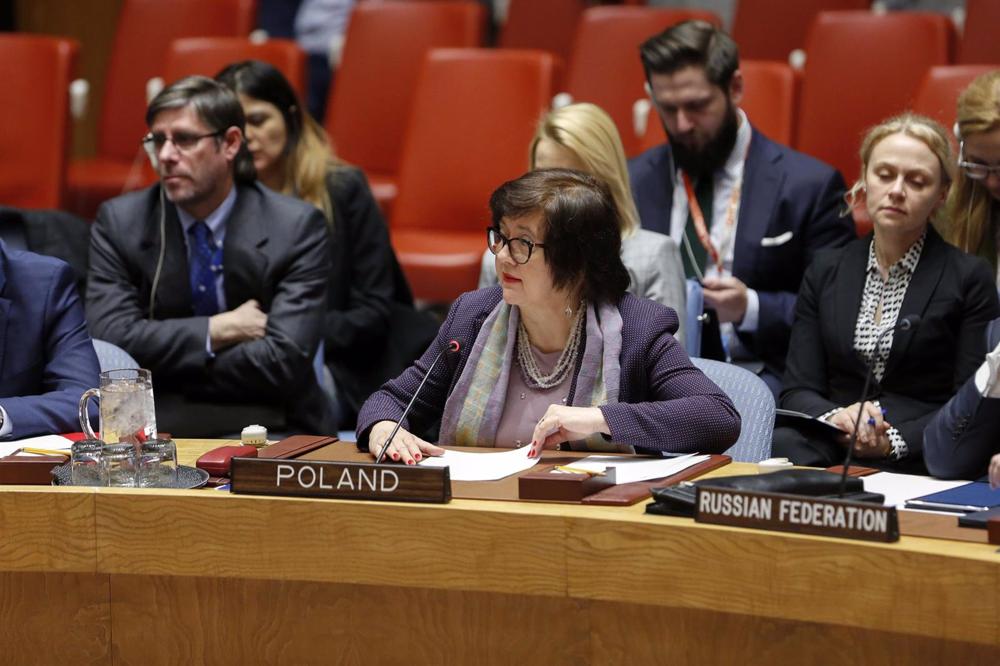
UN Lebanon Coordinator Joanna Wronecka on Monday urged the parties to work together to elect a new president in the context of the absolute political paralysis that dominates the country, with a government resigned since May and fragmented by infighting.
In a meeting with interim Prime Minister Nayib Mikati, which she described as «constructive», Wronecka told him of the need to elect a new president «without further delay» and to form a «fully functional government and implement reforms to put Lebanon on the road to recovery».
Wronecka, who reported this meeting on her official Twitter profile, also met with Mohamed Raad, a Hezbollah deputy, to whom she conveyed «the serious risks of a political stalemate in Lebanon».
Lebanese MPs failed on Thursday, for the ninth time in less than a month and a half, to vote in Parliament to elect Michel Aoun’s successor as head of the country’s presidency. In the first round, the president must be elected with 86 votes, while in the successive rounds an absolute majority of 65 votes is required.
Members of Aoun’s Free Patriotic Movement and the Shiite tandem Amal-Hezbollah voted blank and then withdrew from the session after the first round of voting, with the consequent loss of the quorum necessary to proceed with a new round.
The elections, considered key for the future of the country, consecrated two big winners: the Lebanese Forces, which became the first Christian party in the Assembly with 19 deputies, and the anti-crisis protest movements. On the other hand, the Shiite militia party Hezbollah and its allies, including Aoun’s Free Patriotic Movement, lost their majority in Parliament.
Aoun was elected president in 2016 after nearly half a hundred parliamentary sessions that dragged on for two and a half years. After his departure, he left a power vacuum that is dragging on indefinitely in the face of the inability of political forces to agree on a successor.