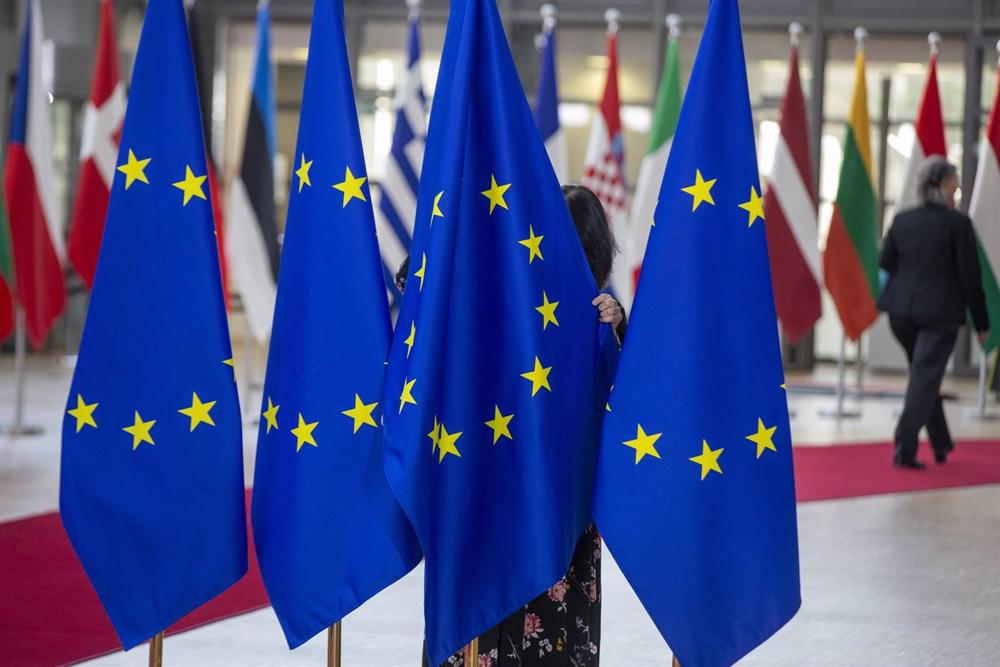
The European Union has approved on Friday exemptions from sanctions on the maritime transport of fertilizers and foodstuffs that aim to facilitate transactions of Russian agricultural products, fertilizers and fertilizers to third countries and that, in practice, will benefit Russian oligarchs.
Following the decision reached Thursday at the summit of EU leaders for the ninth round of sanctions against Russia in retaliation for the invasion of Ukraine, the bloc will allow access to frozen financial resources of owners of key companies in the fertilizer or food sector, facilitating the efforts of port authorities that were now in the trouble of processing transactions that could violate European sanctions.
The successive rounds of European sanctions against Russia have never affected sectors such as trade in fertilizers or Russian agricultural products, but now the EU-27, prompted by six Member States with port interests, explicitly indicate in the sanctions exemptions for individuals with significant business in the sector to facilitate the management of commercial transactions. In this way, it is allowed to unfreeze certain economic resources «necessary» for the purchase, import or transport of agricultural and food products, including wheat and fertilizers.
To ensure that this measure does not become a loophole used by Russian oligarchs to circumvent the sanctions, only those individuals who have a relevant business in the sector before being sanctioned will be able to benefit from the exemptions, diplomatic sources explained.
COUNTERING THE RUSSIAN NARRATIVE In Brussels they are unable to give an estimate of how many people will benefit from the measure, but insist that it will be a handful of people who control the sector, so it will facilitate the majority of transactions. In principle, oligarchs such as Moshe Kantor, shareholder of one of the largest fertilizer manufacturers in Russia, and linked to Russian President Vladimir Putin, and different leaders of the fertilizer company EuroChem such as Vladimir Rashevski and Andrei Melnichenko will be able to benefit from the measure.
«It does not mean that 100 percent of the transports will be carried out easily, but most of them will be better managed», explain these sources, who indicate that the aim is to give legal certainty and room for maneuver to the national authorities to apply the sanctions.
In addition to a practical dimension and support to third countries, relaxing a very specific aspect of the sanctions seeks to counter the Russian narrative that the European sanctions cause a lack of food security in African and Middle Eastern countries, a recurrent criticism of the EU in its meetings with third countries.
The sources consulted acknowledge that in «some way» the sanctions did affect the transport of Russian food and fertilizer, but the impact was «limited» and was due to red tape in European ports. «If we had done nothing, it would have fed that narrative, now we prove that the Russian narrative is absolute nonsense,» he has concluded.
The Netherlands, Belgium, Germany, Portugal, Spain and France believed that the current legal situation contributes to criticisms that sanctions actually hinder trade in food and fertilizer. That is why, as part of the negotiations for the ninth round of sanctions, they called for the introduction of these exemptions.
They called «urgently for an exemption for agricultural products, including fertilizers subject to restrictive sectoral measures, stating that asset freezing measures should not apply to funds or economic resources that are strictly necessary for the purchase, sale, import, export or transport of food and agricultural products from or through Russia or Ukraine,» according to the proposal accessed by Europa Press.
This position was opposed by Poland and Lithuania, which nevertheless managed to ensure that the measure would be studied on a case-by-case basis and would be in the hands of the national authorities of each Member State. The exception is without prejudice to other restrictive measures imposed on Russia and other countries and the respective national security concerns of the Member States, diplomatic sources said.
Source: (EUROPA PRESS)