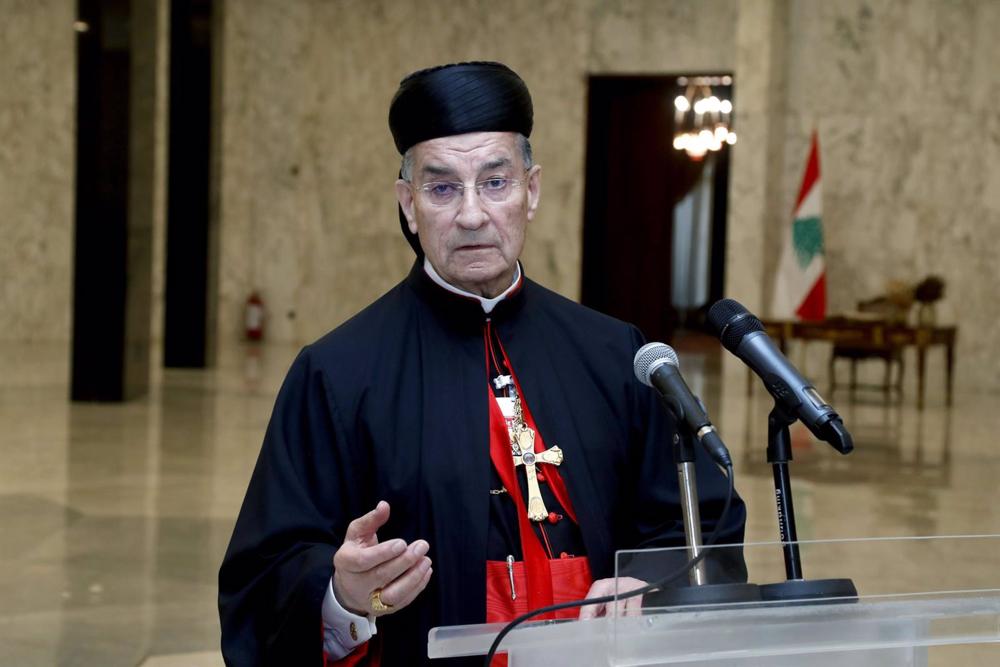
Lebanon’s Maronite Patriarch Beshara al-Rai denounced on Saturday the existence of «a plot» against the country aimed at «causing a presidential vacuum and a constitutional vacuum», after Parliament failed ten times to elect a replacement for President Michel Aoun, whose term expired on October 31.
«All political indications confirm the existence of a plot against Lebanon aimed at causing a presidential vacuum, accompanied by a constitutional vacuum, which is increasingly complicating the election of a president,» he said during his traditional Christmas message.
Thus, he stated that «some political groups blocked the formation of a government before the end of Aoun’s mandate even though they knew that the Executive had resigned and was in office, which would create problems in specifying its role», as reported by the Lebanese news portal Naharnet.
Al Rai stressed that the Maronite patriarchate «is determined to continue its struggle and its efforts within Lebanon and with the Arab and international community to accelerate the presidential elections», before stressing that «the regional conflict is damaging these efforts, as some want a president for themselves, not for Lebanon».
The Maronite patriarch’s remarks came a few days after Lebanon’s acting Prime Minister Nayib Mikati said that several foreign countries are «preparing» a solution to the political crisis in the country. «Things need time,» he explained.
The Lebanese Parliament, divided between the bloc led by the Shiite militia-party Hezbollah and its opponents – with neither having a clear majority – closed its tenth session last week without succeeding in electing the country’s new president. The next one is scheduled to be held as early as 2023.
To be elected, the president must obtain the support of two-thirds of the parliamentarians–86 out of 128–in the first round or an absolute majority in the event that more ballots have to be held, as provided for in Article 49 of the Lebanese Constitution. Aoun was elected president in 2016 after nearly half a hundred parliamentary sessions that lasted two and a half years.
Lebanon has been trapped for several years in a deep and protracted political, economic and social crisis that has resulted in more than 70 percent of the population living below the poverty line and a banking system paralyzed since October 2019.
Source: (EUROPA PRESS)