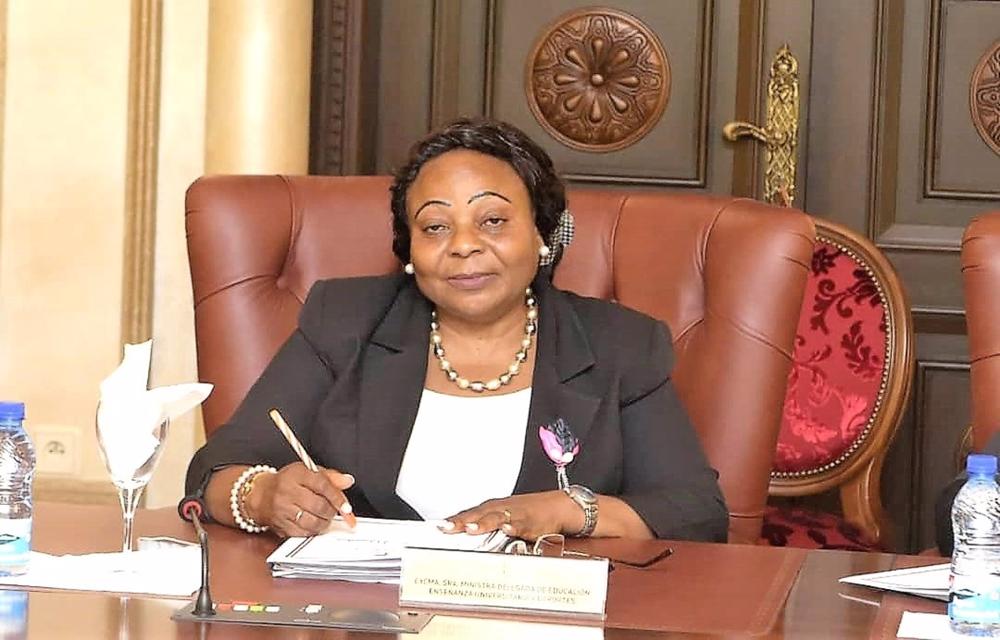
Equatorial Guinea’s President Teodoro Obiang has appointed Manuela Roka Botey as the country’s prime minister, making her the first Equatoguinean woman to hold the post.
Roka Botey, who had been Minister Delegate of Education and Vice Chancellor of the National University of Equatorial Guinea (UNGE), will now be in charge of the administrative coordination of the African country, according to a decree published by the Information and Press Office of Equatorial Guinea.
In addition, the three Vice Prime Ministers, Clemente Engonga Nguema Onguene, who will also be the Minister of Education and Sports; Angel Mesie Mibuy, in charge of relations with the Parliament; and Alfonso Nsue Mokuy, in charge of Human Rights, have been confirmed in their posts.
This appointment has taken place after the Government of the country presented its resignation en bloc to the President, Teodoro Obiang Nguema, following the holding of the last presidential, legislative and municipal elections, in which both the President and his party, the Democratic Party of Equatorial Guinea (PGDE), won a landslide victory, amidst allegations of fraud on the part of the opposition.
According to the election results, Obiang won the presidential election with 94.9 percent of the ballots, ahead of Andres Esono, of the Convergence for Social Democracy of Equatorial Guinea (CPDS); and Buenaventura Monsuy, of the Social Democratic Coalition Party (PCSD). Furthermore, the PDGE won all the seats at stake: the 100 in the Chamber of Deputies, the 55 elected in the Senate -which has 70 seats, although 15 are appointed directly by the President- and the 588 in the municipal elections, according to the data of the electoral commission.
Obiang, 80 years old and the longest serving president in the world, has led Equatorial Guinea since the uprising against his uncle, Francisco Macías Nguema, who became in 1968 the first president of the country after independence from Spain. Although there are 18 legalized parties in the country, in practice there are no opponents with real options to remove Obiang from power, amid speculation about the possibility of a ‘dynastic’ succession that would lead to the rise of his son ‘Teodorín’, vice president since 2016.
Source: (EUROPA PRESS)