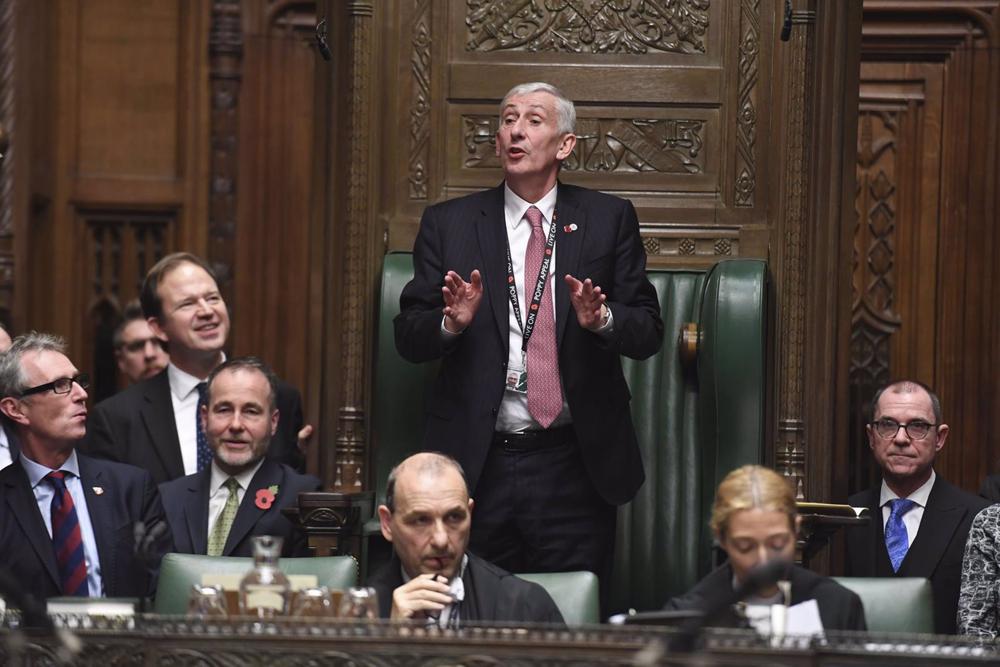
The Speaker of the UK House of Commons, Lindsay Hoyle, has concluded Tuesday that there was no intimidation of Conservative MPs to vote in favor of a Labour motion on fracking on October 20 that was understood to be a vote of confidence in the government of then former Prime Minister Liz Truss.
«The atmosphere was tense and members were raising their voices to make themselves heard, but there is no evidence of intimidation or undue influence on other members,» Hoyle said, adding that «the crowd made it difficult to see what was really going on,» according to the Guardian.
Thus, Hoyle said that, as part of his investigation into the facts, he asked several members about these apparently violent physical contacts, to which one of them said «clearly» that no one was being forced to enter the room to cast their vote in favor of Truss.
Likewise, the Speaker has stressed the need for parliamentarians to treat each other with respect, while saying that he takes allegations of intimidation «very seriously» and will take «swift action when necessary» to address inappropriate behavior in the House.
Some 40 MPs abstained or chose not to vote on a motion tabled by Labour on October 20 on fracking, a practice used to extract fossil fuels that the Tories clearly opposed in the run-up to the last election.
The vote in the House of Commons was understood as a vote of confidence in the then government of former Prime Minister Liz Truss and caused a stir within the Conservative caucus, with contradictory information about expulsions if any member broke party discipline. Subsequently, No. 10 changed his mind on this point at the last minute.
In fact, the head of the Conservative parliamentary group, Wendy Morton, had to deny having been dismissed from her post for being among the abstentionists, while some Conservative MPs denounced alleged intimidation to give positive votes to Truss during the fracking vote.
In this regard, Labour MP Chris Bryant called for an inquiry within Parliament after observing several scenes of Business Minister Jacob Rees Mogg and Deputy Prime Minister Therese Coffey putting heated pressure on their colleagues to support Truss.
After this controversy and the successive requests for resignation that had been accumulating for months, in public and without hot air, Truss finally decided to appear before Downing Street to assume that he did not have the capacity to fulfill the mandate given to him by his own colleagues.