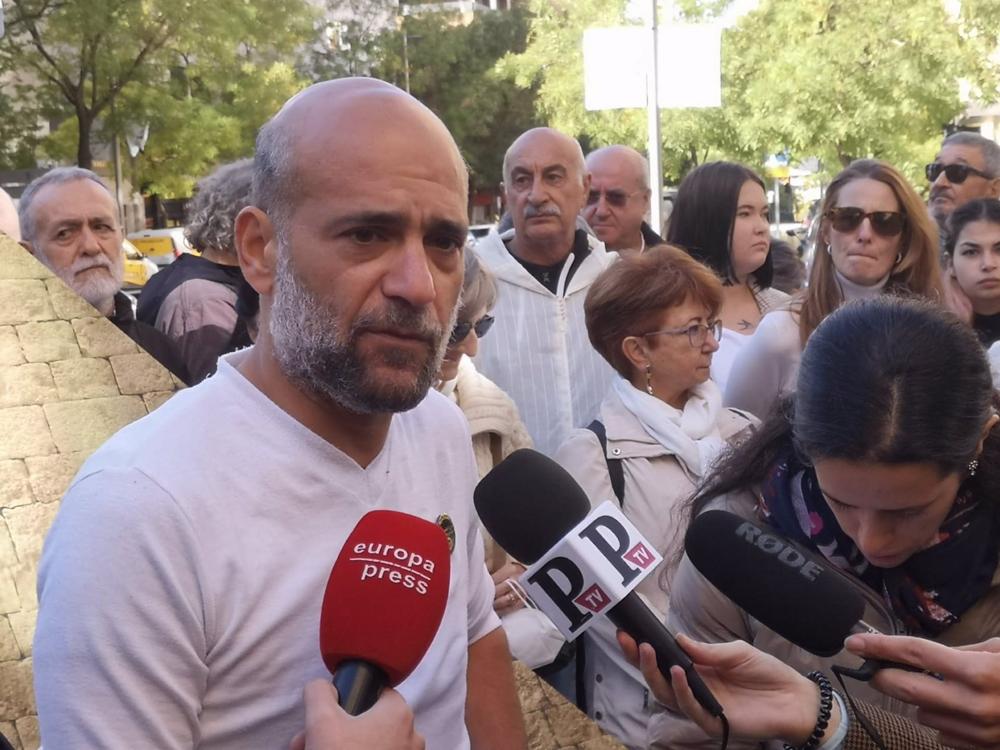
Well-known Egyptian-Palestinian activist Ramy Shaath has criticized and lamented that the international community is giving Egypt the «honor» of hosting the upcoming United Nations Climate Conference (COP27) while local environmental NGOs have not been allowed to attend and their advocates are imprisoned.
«We are saddened that such a regime is being given this honor. It is unbelievable in a country where its own people are not allowed to talk about their future, at a time when our climate activists are in jail and Egyptian human rights or environmental NGOs are not allowed to attend,» he stressed.
Shaath told Europa Press that he hopes that the international community will listen to public opinion and take advantage of his participation in this summit to demand that the president, Abdelfatá al Sisi, respect human rights and release political prisoners, who number some 60,000.
«The rest of the world is asking them to raise the issue of the detainees, to raise the issue of Human Rights, to insist on it and deprive this regime of the spectacle and the greenwashing that this summit entails,» he said.
The Egyptian city of Sharm el Sheikh will host the next climate summit from November 6 to 18, amid criticism from human rights organizations for the constant violations and persecutions that have been carried out with impunity since the 2013 coup d’état by Al Sisi against the elected government of Mohamed Morsi.
EGYPT, THE «REPUBLIC OF FEAR».
«In Egypt, since the coup, since the military took power in 2013, it has become a republic of fear,» says Shaath, who in January this year was released after spending almost 900 days in prison.
Shaath, arrested in Egypt in June 2019 and remanded in custody along with other activists on charges of aiding a terrorist group, recounts that he went two years without being charged.
«No opinion is allowed, no freedom of expression. No demonstrations are allowed, no parties are allowed to work. When people participate in a party event, they are arrested. There is a massive surveillance where policemen in the streets check your phones looking for a joke or comment,» he denounces.
«All this is enough for them to be arrested,» Shaath stresses to Europa Press during a protest event held this Thursday in Madrid in front of the Egyptian Embassy. «There are 60,000 Egyptian political prisoners rotting today in hell with absolute contempt for the law,» he emphasizes.
«There is a complete confiscation of the media, all are owned by the Army and those who are not persecuted,» as well as a «total disregard for humanity,» the activist recounts, citing «persecutions» and «massacres» committed by the Police in the streets of Cairo.
«This continues to happen and continues to grow. In the seven years of this regime, the number of prisons in Egypt doubled with three times the capacity. That is their main achievement,» denounced Shaath, who also heads an organization against the Israeli occupation of Palestine.
HIS TIME IN PRISON Shaath says that during his time in prison, he was repeatedly subjected to «forced disappearance», the last one shortly after his release, thanks to the tireless work of his wife, Céline Lebrun-Shaath, and human rights NGOs. «I was forced to choose between my nationality and my freedom in order to get out of prison. I did not give up either,» says the activist.
«Disappearance means a place where it is not an official detention center, where your family, your lawyers do not know where you are. Where they refuse to say they have you. I was blindfolded, handcuffed and tied to a wall for a few days. And then I spent two and a half years in a 23-square-meter cell,» he recalls.
Shaath recounts that that cell was «a small living room,» which at best he shared with 18 other prisoners, although at times there were more than 30 of them.
A «ramshackle» place that they also shared with insects, rats, snakes, and vermin of all kinds. «The one meter by 75 centimeters bathroom had a hole and a jet of cold water on top, there was no medical attention, there were many miseries and tortures were committed on the body and soul,» he says.
«I have seen many people die for lack of medicine or due to negligence or torture, it was a very bad time. But I will never forget the faces of the people I met, and I will never rest until they are out,» Shaath confides.