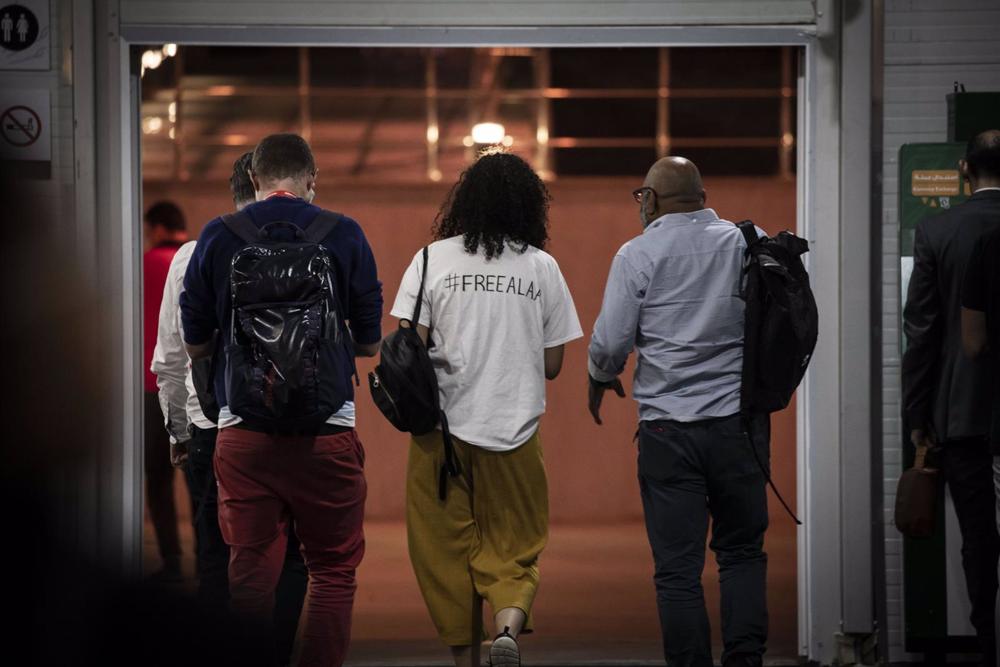
Prominent activist Alaa Abdelfatá «is in good health» after Egyptian health authorities performed a «medical intervention» on him after he spent more than 200 days on hunger strike against his imprisonment.
«Egypt’s public prosecutor has just issued a statement: Alaa is in good health. His vital signs suggest that there is no hunger strike.
He is comfortable where he is. And mom visited him two days ago on Nov. 7!» his sister, Mona Seif, also an activist, has indicated on her Twitter profile.
Shortly before, British Minister of State Tariq Ahmad said he had met with the Egyptian ambassador to the UK to reiterate the government’s call, led by Prime Minister Rishi Sunak, for the case to be resolved «swiftly».
«We hope that we will be granted consular access and that Alaa will receive proper medical care,» he said on his official Twitter profile, after the activist’s lawyer complained that he had been denied access to the prison where he is being held.
The 40-year-old activist has been ingesting only 100 calories for more than 200 days to demand that Egyptian authorities allow him consular access to the UK. Sunak has vowed to «address at the highest levels» Abdelfatah’s release and denounced his «unacceptable treatment» in a missive sent to his sister, Sanaa Seif.
Two days ago, the UN High Commissioner for Human Rights, Volker Turk, called on Egypt to «immediately» release Abdelfatah, who on Sunday stopped drinking water as part of a hunger strike that began in April.
Abdelfatá, a leading Egyptian blogger and one of the main figures of the popular uprising against Hosni Mubarak in 2011 in the framework of the ‘Arab Spring’, has been in prison for nine years and in 2021 was sentenced to another five-year prison term for «spreading false news», charges that several NGOs have branded as false.
The current Egyptian president, Abdelfatá al Sisi, came to power in a coup d’état in July 2013, which he led after a series of mass demonstrations against the then president, the Islamist Mohamed Mursi, the first democratically elected president of the country, who died in 2019 during a court hearing against him following his arrest after the uprising.
The leader has promoted a broad campaign of repression and persecution against opponents, both liberal groups and Islamist organizations – going so far as to declare the Muslim Brotherhood a terrorist organization – an initiative that human rights groups have denounced as the most serious in recent times.