Former Brazilian congressman Jean Wyllys has hoped that the newly elected president Luiz Inácio Lula da Silva will reconcile the country after defeating Jair Bolsonaro in the October 30 elections: «God is the one who forgives. We want reconciliation.
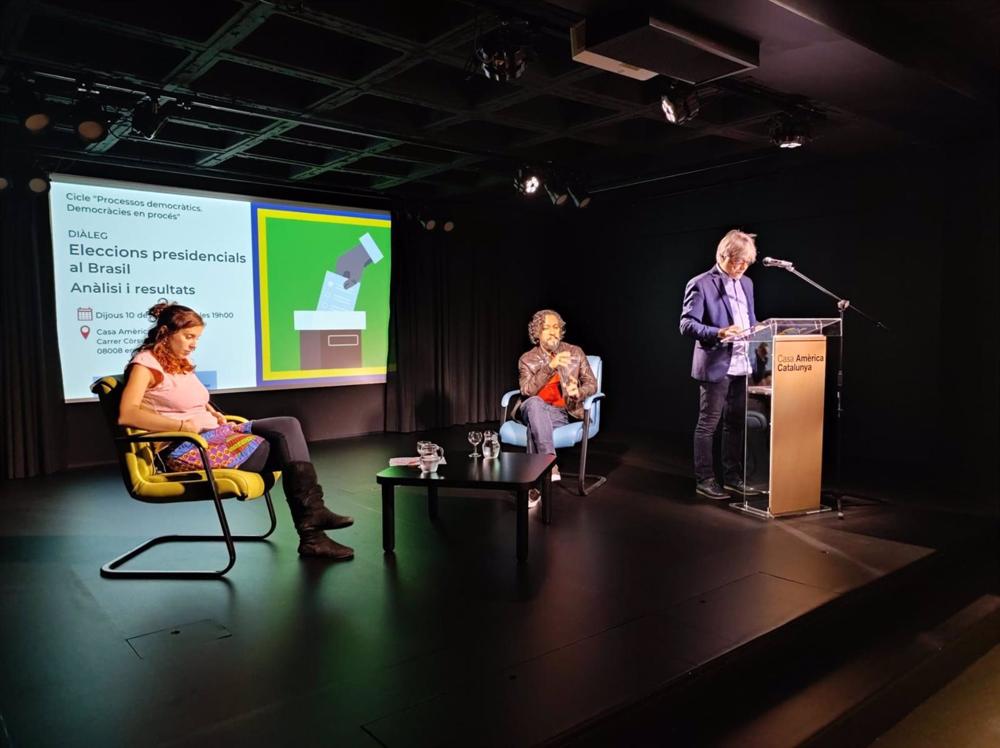
This is what he said this Thursday in a debate with the president of the European Parliament delegation for relations with Brazil, José Manuel Fernandes (PPE), moderated by journalist Marta Molina, in an event organized by the European Parliament Office in Barcelona and Casa América Catalunya.
The also LGTBI activist and journalist Jean Wyllys, exiled in Barcelona, has reflected on Bolsonaro’s stage and warned that «democracy can disappear overnight», since this stage has shown that capitalism can survive without democracies, according to him.
He stressed that Lula’s victory has been more significant than is believed, because «he has defeated the harassment of businessmen so that their workers would vote for Bolsonaro, the paramilitary mafias that control the territory, evangelists», and criticized that in recent years there has been a radicalization of the country, something for which he blames the extreme right.
Regarding the economy and international alliances, he defended that these agreements «must be honest: they should not only favor rich countries», and regretted that there are people in the world who deny climate change and science.
JOSÉ MANUEL FERNANDES The Portuguese MEP Fernandes, who intervened telematically, celebrated the fact that Lula defends deforestation, the fight against climate change and against poverty, since he sees in him the same priorities as the European Union: «We have a common ground and on it we have to build development».
He also highlighted that Lula made a speech in favor of the agreement, during his first speech after the election result, and that he contributes to reconciliation, but he pointed out that both Lula and Bolsonaro obtained «negative votes», from people who voted for them because they did not like the opposite: he considers that this explains the polarization and radicalization in Brazil.
Fernandes affirmed that development can only be achieved if there is peace; that «there are no good dictatorships, neither of the left nor of the right», and that moderation is essential instead of ideological extremes feeding back on each other.
He also valued the pragmatism he sees in Lula: «He will try to seek sustainability in his government, creating economic conditions to reduce poverty», and defended agreements such as Mercosur, alleging that it promotes and demands respect for Human Rights and the fight against poverty.