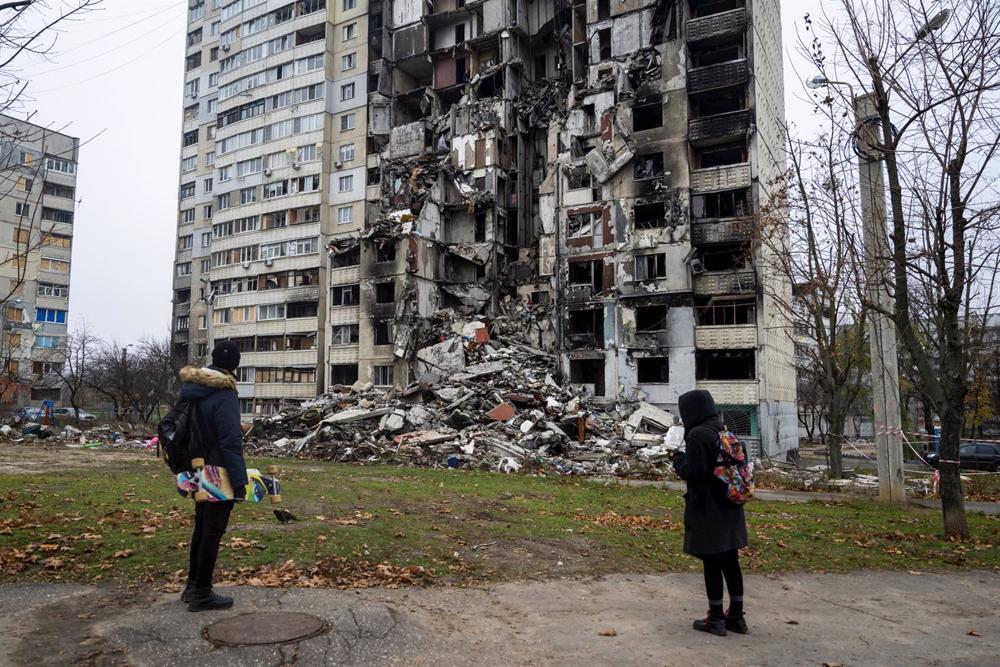
The International Atomic Energy Agency (IAEA), the United Nations nuclear agency, has confirmed severe material damage from shelling at a nuclear research facility in the northeastern Ukrainian city of Kharkov, although it has found no evidence of radioactive leakage or disappearance of declared nuclear material.
This was reported by the IAEA in the conclusions of its mission to the Kharkov Institute of Technology (KIPT) between November 8 and 10, the first to the site since the beginning of the war in Ukraine. Agency experts were also able to visit the nearby RADON radioactive waste repository, which «so far remains intact».
While the radioactive integrity of the Kharkov laboratory has not been affected, IAEA Director General Rafael Mariano Grossi said that «the extent of the damage to this nuclear research facility is dramatic and shocking, even worse than expected.»
«The scale and intensity of the sustained attacks on KIPT violate the seven indispensable pillars of nuclear safety and security that I described at the beginning of the conflict,» added the director general of the organization in a statement on its website.
The IAEA has confirmed damage to «almost all of the affected buildings at the site, many of them probably irreparable,» following at least 100 incidents of missile strikes and shelling during the first three weeks of the conflict alone, which left the site without water and electricity for more than a month.
Throughout this period, KIPT security personnel, the IAEA has applauded, «remained on duty and managed to maintain the site’s physical protection system, implementing contingency measures to counter and compensate for the damage.»
The agency qualifies however that it has been unable to access the nuclear material at the KIPT neutron source research reactor — which shows only external structural damage — due to a lack of power. «The IAEA will conduct additional verification activities on this nuclear material once the facility’s supply has been restored,» the note concludes.