Italy’s Prime Minister, Giorgia Meloni, has argued that the controversies that have arisen in recent days over her government’s veto of NGO ships show that «the solutions identified so far are probably not the best and are insufficient», and has therefore advocated reopening the debate within the EU.
«It is much better to collaborate than to argue», said Meloni in his appearance before the media after the G20 leaders’ summit, where he met, among other leaders, the President of the European Council, Charles Michel, with whom he discussed precisely immigration issues.
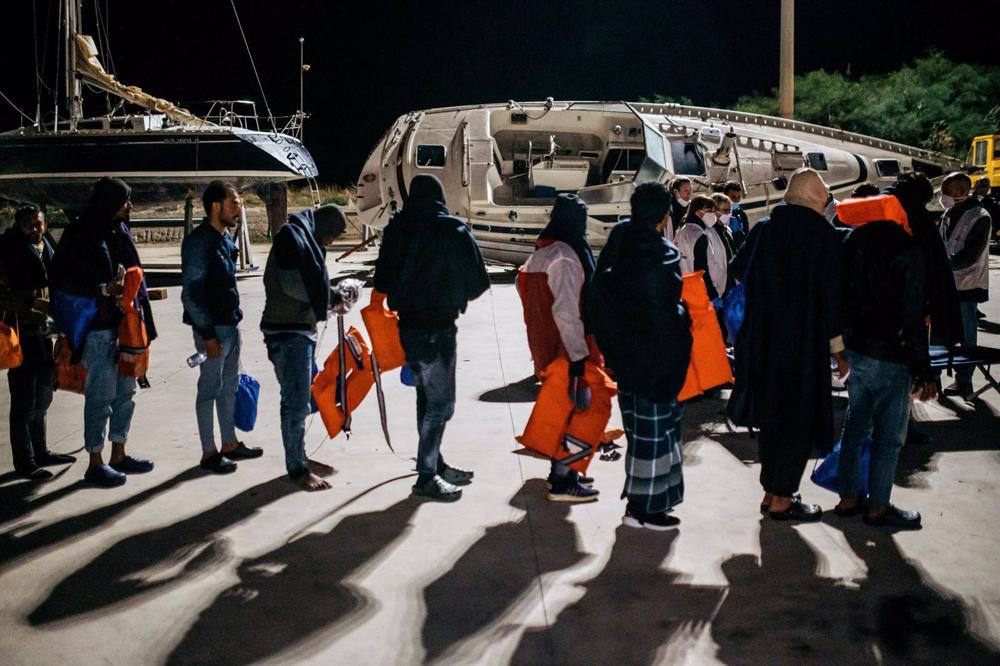
The arrival of the far-right in the Italian government has revived Rome’s criticism of the NGOs that rescue migrants and refugees in the Mediterranean, which it accuses of indirectly encouraging the work of the mafias. The issue has already generated tensions with other countries, in particular with France, which last week received a ship, the ‘Ocean Viking’, with more than 200 migrants on board.
The Italian Minister of the Interior, Matteo Piantedosi, has argued Wednesday in the Senate that the «absolute priority» of his Administration is to «protect the dignity of people», but at the same time warned that no more can be asked of a country that this year alone has recorded more than 90,000 arrivals on its shores.
The goal, he explained, is to «govern» the migratory flows, not «suffer them», as reported by the Rai channel. In this sense, he has not rejected that Italy can welcome those who need it, but has advocated to combat irregular immigration.
Likewise, Piantedosi, a member of Matteo Salvini’s League, has affirmed that the ‘Ocean Viking’ did not enter Italian waters and that the responsibility in this case fell on Libya or Malta, due to their proximity, or on the flag country of the vessel.
«We need a new European policy truly based on the principle of solidarity», has claimed the minister, who has also called to put the focus on North Africa to contribute to the development and combat the networks that traffic in people.
More than 20,000 people have lost their lives in the waters of the central Mediterranean since 2014, including at least 1,365 this year alone, according to data from the International Organization for Migration (IOM).