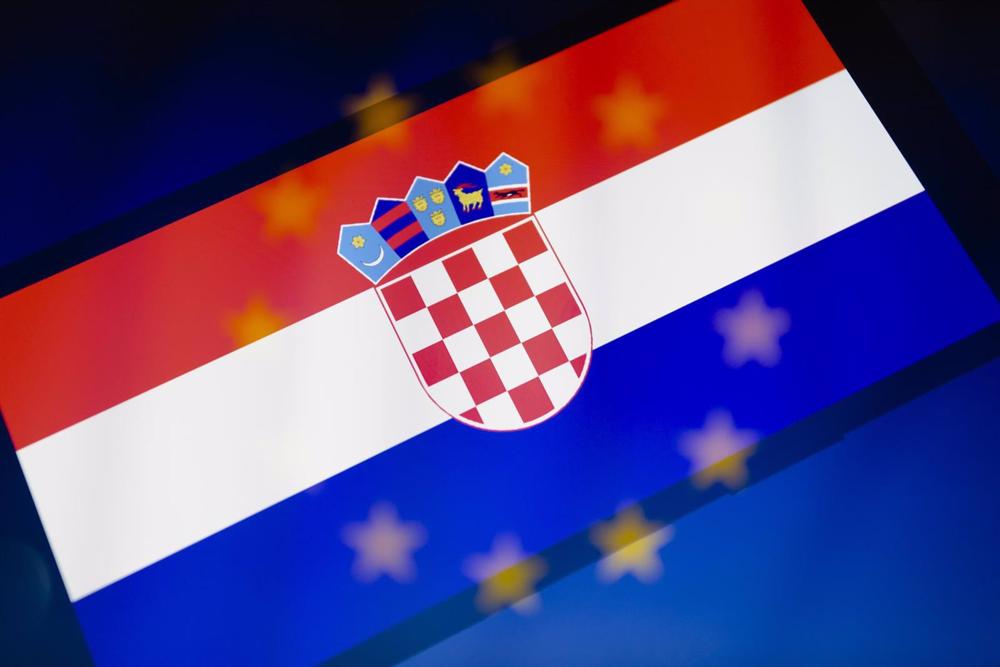
Croatia welcomes 2023 with the adoption of the euro as its currency and its incorporation into the Schengen area, an important milestone for this country that joined the European Union a decade ago.
With the changeover from the kuna, hitherto the national currency, to the euro, Croatia becomes the 20th state to share a common currency. The last country to join the euro was Lithuania in 2015.
Croatia had to comply with a number of fiscal and economic governance rules to adopt the single currency. The exchange rate will be 7.5345 kuna per euro, and the exchange will be free until the end of 2023 at all banks in the country.
Although the euro comes into effect as the official currency this Sunday, January 1, Croatians will have a transition period until January 14 when they will be able to pay with both currencies.
Under European Union (EU) treaties, all member states, with the exception of Denmark, are obliged to join the euro as soon as they meet the requirements, but some, such as Sweden, Poland and Hungary, have not expressed the political will to do so.
FIRST ENLARGEMENT OF THE SCHENGEN ZONE SINCE 2011 The last enlargement of the Schengen area was in 2011, when Liechtenstein was included. With its incorporation, Croatian citizens will be able to move within the Schengen zone without a passport.
Both the currency changeover and its inclusion in the Schengen area could mean a tourist boom for Croatia, which attracts tourists for its beaches along the Adriatic coast and the medieval city of Dubrovnik.
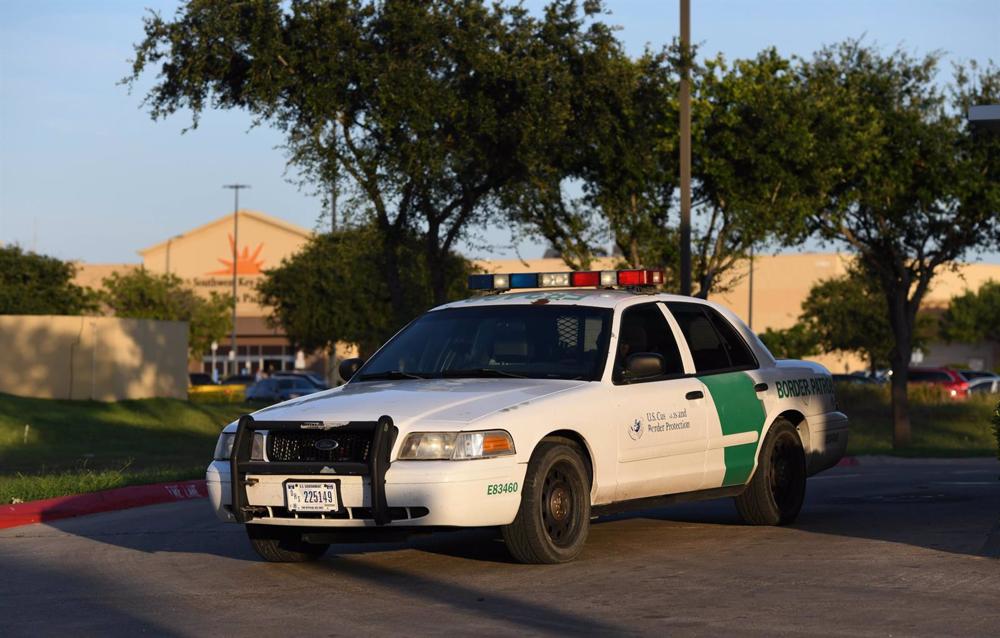
The elimination of border controls with Slovenia and Hungary and for ferries to Italy will also facilitate the arrival of tourists and business travelers. However, people arriving in the country by plane will not benefit from the advantages of the Schengen area until March 26.
The country’s statistics show that between January and November, Croatia received 16 million foreign visitors, close to the 17.3 million it received in its record year, 2019, before the pandemic.
European Commission President Ursula von der Leyen is scheduled to make a symbolic visit to the Slovenian-Croatian border at the towns of Obrezje and Bregana on Sunday.
The adoption of the euro comes at a complicated time, with the war in Ukraine, rising energy costs, supply chain problems and soaring inflation across Europe.
Croatia’s inflation rate stood at 13.5% in November, above the EU average of 10.1%. EU Trade Commissioner Valdis Dombrovskis, based on previous experience, expects a price increase of between 0.1% and 0.3% following the introduction of the euro.
In the medium term, however, this is expected to be offset by lower currency conversion costs and lower interest rates. Croatia’s inflation is forecast to fall to 5.7% in 2023.
For their part, Croatians believe that traders will round up when converting prices. The April Eurobarometer showed that 55% of citizens were in favor of the euro, while 42% were against it.
Croats have lived for decades with a dual currency system. Since the 1970s when many Croats moved to Western Europe, often to Germany, for work and with the massive influx of tourists it became normalized to pay in deutsche marks, and later in euros, for houses, cars and other high-priced goods.
Source: (EUROPA PRESS)