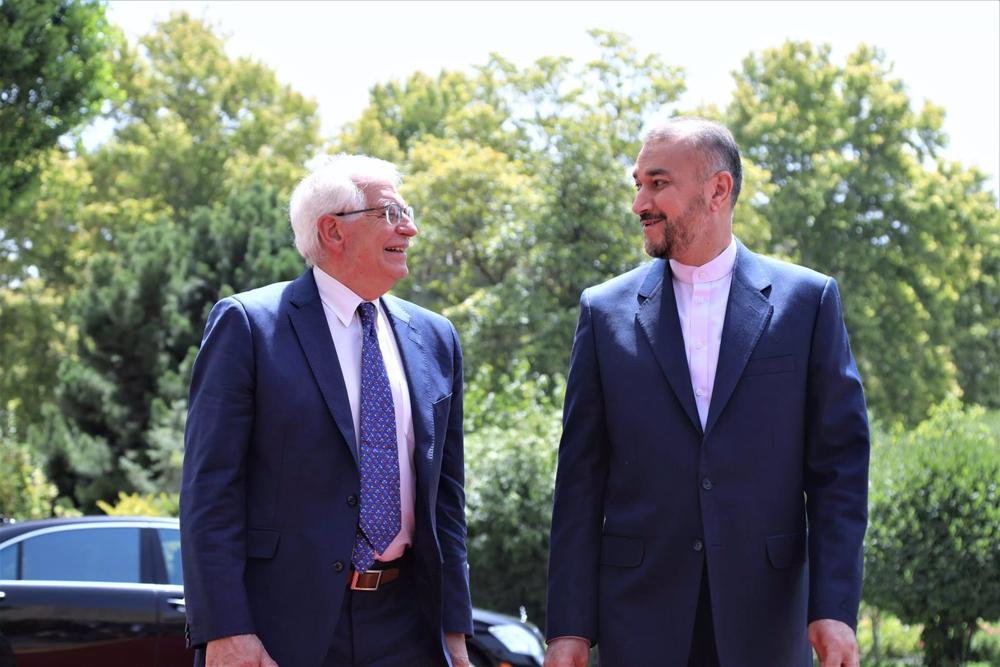
The High Representative of the European Union for Foreign Policy, Josep Borrell, has conveyed in a telephone call to the Iranian Foreign Minister, Hosein Amir Abdolahian, the unity of the EU-27 in repudiating the violent repression of demonstrations in Iran.
On the 50th day of protests in Iran following the death in custody of Mahsa Amini for allegedly wearing the veil incorrectly, the head of European diplomacy has stressed that Europe remains «united» in condemning the response of the authorities against the protests, active since September in different parts of Iran.
A few weeks ago, the European bloc approved sanctions in the face of the wave of repression in Iran, adding 11 people and four entities, among them the head of the Morality Police, Mohamed Rostami, to its ‘black list’.
For its part, Iran has responded to the sanctions with its own measures against European politicians and media outlets that promote human rights in the country. During the conversation, Abdolahian, who again attributed the demonstrations to violent groups, warned that the «hard stance» of some European leaders has generated violence also in Europe and paved the way for security threats in Europe, according to IRNA agency.
NEGOTIATIONS ON NUCLEAR AGREEMENT On the negotiations to resume the nuclear agreement with Iran, talks that have been going on for 17 months without an agreement in sight to ensure Tehran’s compliance and to get the United States to return to the pact signed in 2015, Borrell reiterated the «urgent need» for Iran to cooperate with the International Atomic Energy Agency (IAEA).
In this regard, the Iranian foreign minister has defended Tehran’s «constructive» will for the reactivation of the nuclear deal and said that Iran is ready to reach a «good, strong and lasting» agreement.
Although the EU insists on separating the sanctions from the negotiations for the nuclear agreement, the fact is that the tougher tone of Brussels against Tehran with two rounds of sanctions almost immediately, against those responsible for the repression of the demonstrations and for Iran’s military aid to Russia in the context of the war in Ukraine, have cooled the options of closing an agreement on the pact that seemed close during the summer.