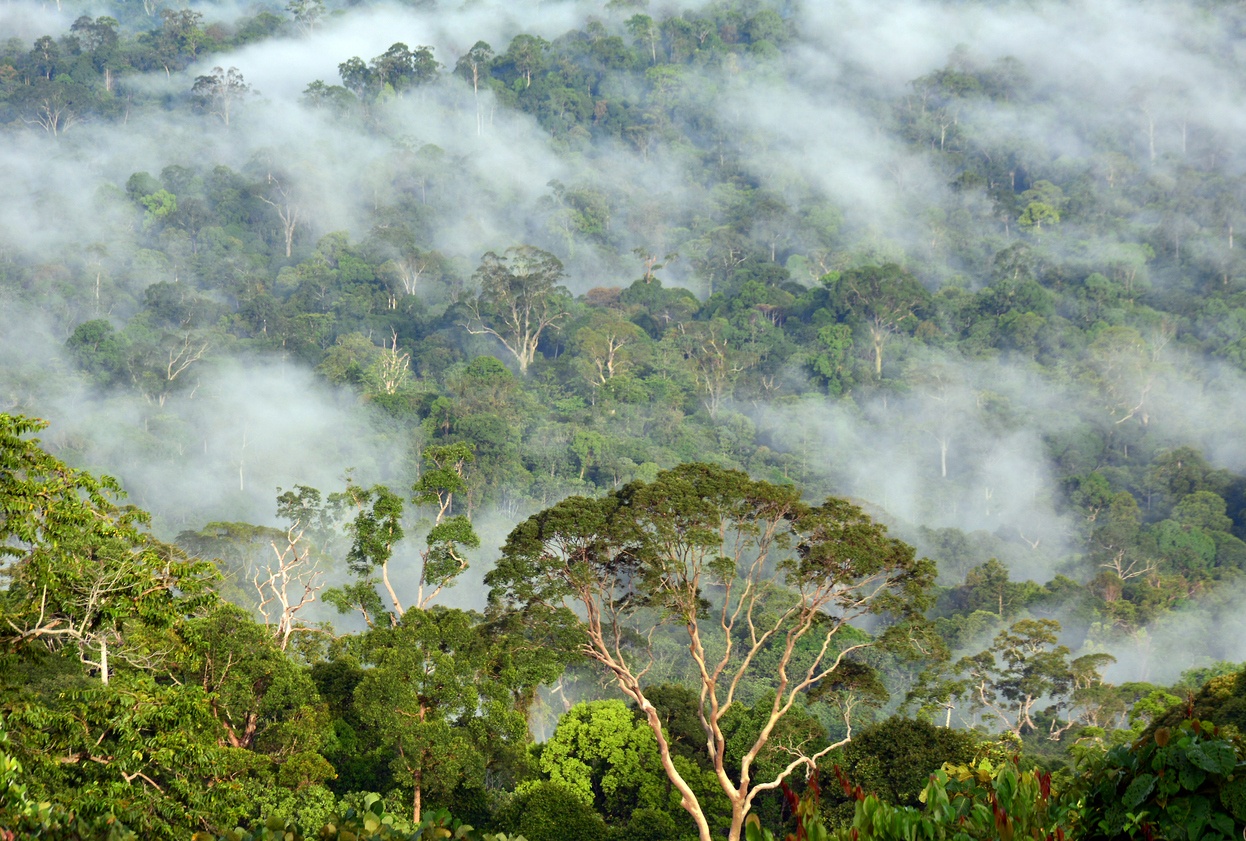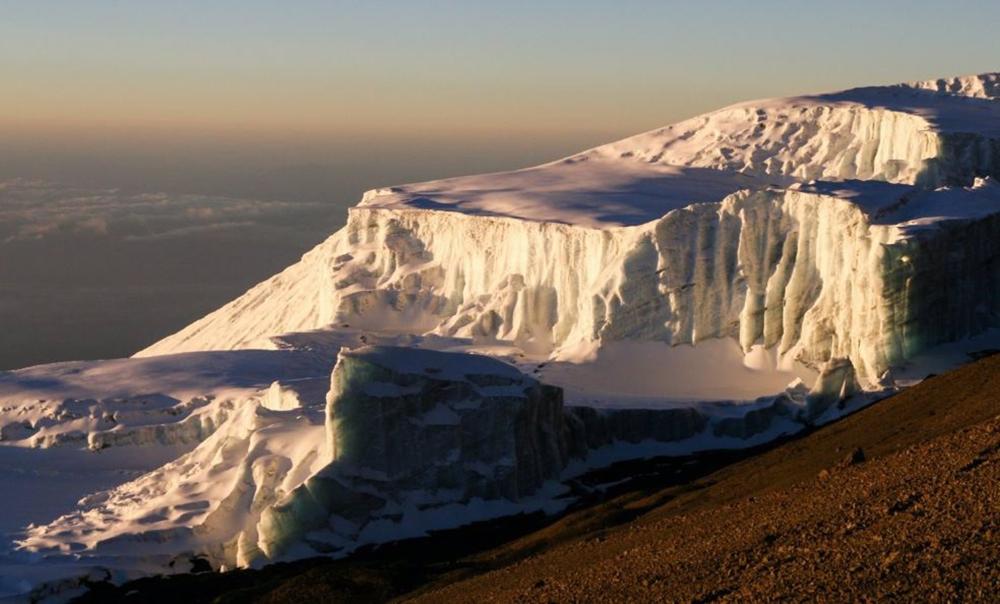
One third of the fifty or so UNESCO World Heritage sites that host glaciers will most likely be gone by 2050, including those of Kilimanjaro and Yellowstone.
But it is still possible to save the other two-thirds, if the increase in global temperatures does not exceed 1.5°C compared to the pre-industrial period. This will be a major challenge for COP27, reveals a report published by UNESCO on November 3.
50 UNESCO World Heritage sites are home to glaciers (a total of 18,600 glaciers have been identified in these 50 sites, covering about 66,000 km2), representing almost 10% of the Earth’s total glacier area. They include the highest (next to Mount Everest), the longest (in Alaska) and the last remaining glaciers in Africa, among others, providing a representative overview of the overall status of glaciers in the world.
But the new UNESCO study, in collaboration with IUCN, shows that these glaciers have been retreating at an accelerated rate since 2000 due to CO2 emissions, which are increasing temperatures. They are currently losing 58 billion tons of ice each year, equivalent to the combined annual water use of France and Spain, and are responsible for nearly 5% of observed global sea level rise.
The report concludes that glaciers in one-third of the 50 World Heritage sites are doomed to disappear by 2050, regardless of efforts to limit temperature increases. But it is still possible to save glaciers in the remaining two-thirds of the sites if temperature increases do not exceed 1.5 °C compared to the pre-industrial period.
In addition to drastically reducing carbon emissions, UNESCO advocates the creation of an international fund for glacier monitoring and conservation. Such a fund would support comprehensive research, promote exchange networks among all stakeholders and implement early warning and disaster risk reduction measures, UNESCO explains in a statement.
Half of humanity depends directly or indirectly on glaciers as a source of water for domestic use, agriculture and energy. Glaciers are also pillars of biodiversity and feed many ecosystems.
According to available data, the UNESCO report considers that glaciers in all World Heritage sites in Africa are very likely to disappear by 2050, including those in Kilimanjaro National Park and Mount Kenya. In Asia, glaciers in the Three Parallel Rivers Protected Areas of Yunnan (China) stand out, with the highest mass loss in relation to 2000 (57.2%) and also the fastest melting glacier. The study also cites glaciers in western Tien-Shan (Kazakhstan, Kyrgyzstan, Uzbekistan) which have shrunk by 27 % since 2000.
In Europe, it states that glaciers in the Pyrenees of Monte Perdido (France, Spain) are very likely to disappear by 2050, as well as in the Dolomites (Italy).
In Latin America, glaciers in Los Alerces National Park (Argentina) are cited as having the second largest mass loss since 2000 (45.6%), and glaciers in Huascarán National Park (Peru) have shrunk by 15% since 2000.
In North America, glaciers in Yellowstone National Park are very likely to disappear by 2050, as are those in Yosemite Park.