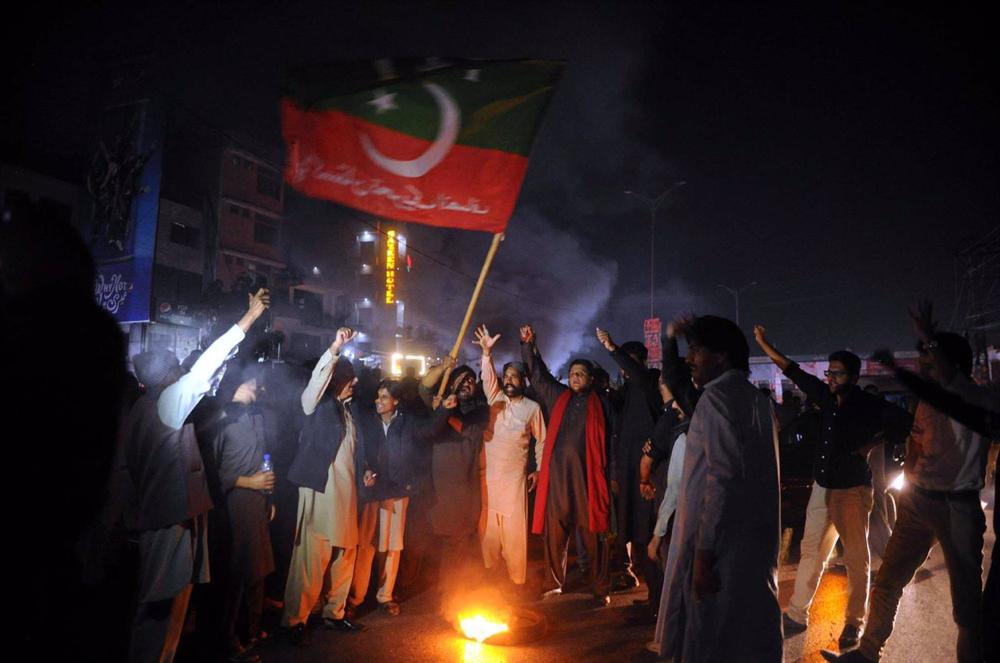
Pakistan’s former Prime Minister Imran Jan has on Saturday put a new twist to the political situation in the country by calling off his long-awaited march on the capital Islamabad and instead announcing the upcoming withdrawal of all MPs of his party, the Pakistan Justice Movement (Pakistan Tehrik e Insaf or PTI), from all assemblies in the country.
«We will not be part of this system,» Jan announced from Rawalpindi in his first major rally after the assassination attempt he was subjected to earlier this month during a stopover on his «long march» to the capital to protest against the government, which he accuses of being part of a conspiracy with the United States that ended his rule in a no-confidence motion last April.
He was also disqualified at the end of October by the electoral commission for not having declared the money from the sale of gifts and presents received from international leaders when he was at the head of the government.
We have decided to abandon all the assemblies and leave this corrupt system», added Jan, among new criticisms to the Government and to a mysterious character, whom he calls «Dirty Harry», allegedly responsible for his fall from grace and who, according to some journalists in the country, could be none other than the director of the country’s Intelligence Services (ISI), Faisal Nasir.
Jan’s party still wields enormous influence in the country, where it runs the states of Punjab and Khyber Pakhtunkhwa. The withdrawal of the PTI could generate a power vacuum large enough to force the government of Prime Minister Shabhaz Sharif to declare early elections.
The former prime minister has not given further details about this alleged withdrawal although he has warned that he will soon meet with the leadership of his party to set a date on which to make this announcement. «We are here to put pressure on the government, and to force the institutions to do their job,» he told the crowded rally, as reported by Dawn.
It so happens that Jan’s announcement coincides with the appointment of Gen. Asim Munir, whom the former prime minister had ousted as ISI chief, as the new head of the Armed Forces – a crucial appointment because the institution wields enormous ascendancy over the politics of a country that the military has directly ruled for roughly half of its history since its creation in 1947.