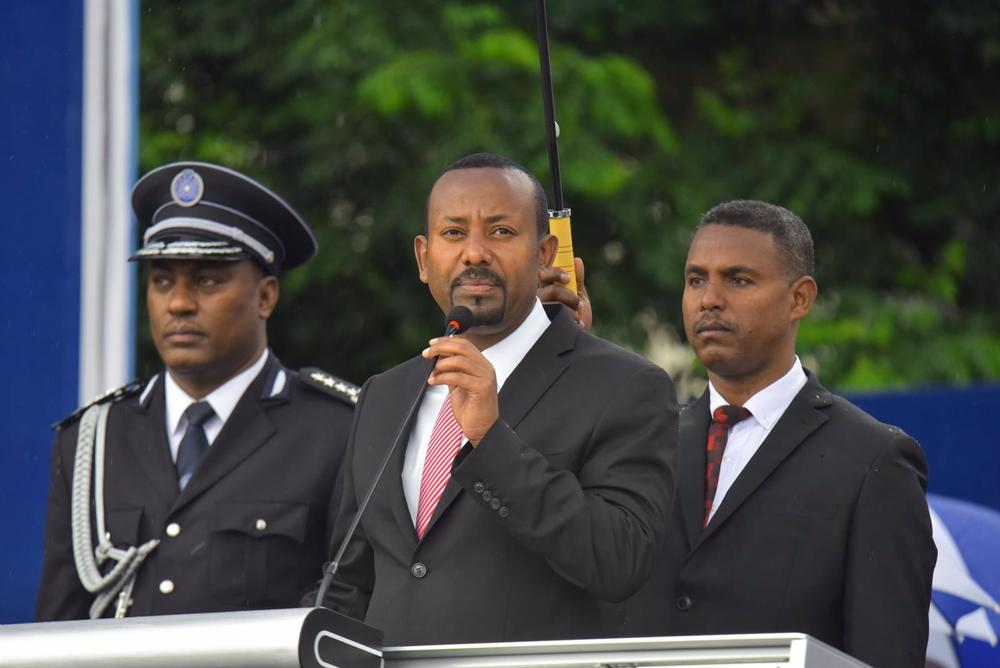
The Government of Ethiopia and the Tigray People’s Liberation Front (TPLF) have agreed to establish a ceasefire monitoring team in the northern Tigray region as part of steps to implement the November cessation of hostilities agreement brokered by the African Union (AU).
Former Kenyan President Uhuru Kenyatta, who is spearheading these AU efforts, revealed that the parties «have agreed to give the AU team full access to ensure that all key elements of the agreement are implemented on the ground,» before showing confidence that «some of the existing challenges will be addressed, given that there is full commitment on both sides.»
Thus, he has indicated that the agency wants «material steps» and stressed that it will travel to the Tigrayan capital, Mekelle, to address the case. «We are confident that we are moving in the right direction,» he said, according to the Kenyan newspaper ‘The East African’.
«We are very happy and grateful to the parties who have been at the center of the negotiations over the past few months. We are making tremendous progress,» he stressed, before stressing that these measures «are aimed at restoring normalcy in Tigray and peace in Ethiopia.»
The conflict in Tigray erupted in November 2020 following a TPLF attack on the army’s main base in Mekelle, after which the government of Prime Minister Abiy Ahmed ordered an offensive against the group following months of political and administrative tensions, including the TPLF’s refusal to recognize an election postponement and its decision to hold regional elections outside Addis Ababa.
The TPLF accuses Abiy of whipping up tensions since coming to power in April 2018, when he became the first Oromo to accede to office. Until then, the TPLF had been the dominant force within Ethiopia’s ruling coalition since 1991, the ethnically-supported Ethiopian People’s Revolutionary Democratic Front (EPRDF). The group opposed Abiy’s reforms, which it saw as an attempt to undermine its influence.
Source: (EUROPA PRESS)