The European Union and NATO announced Wednesday the launch of a joint initiative to increase the protection of the European infrastructure network against possible external attacks, a measure in response to situations such as the sabotage of the Nord Stream gas pipeline last September.
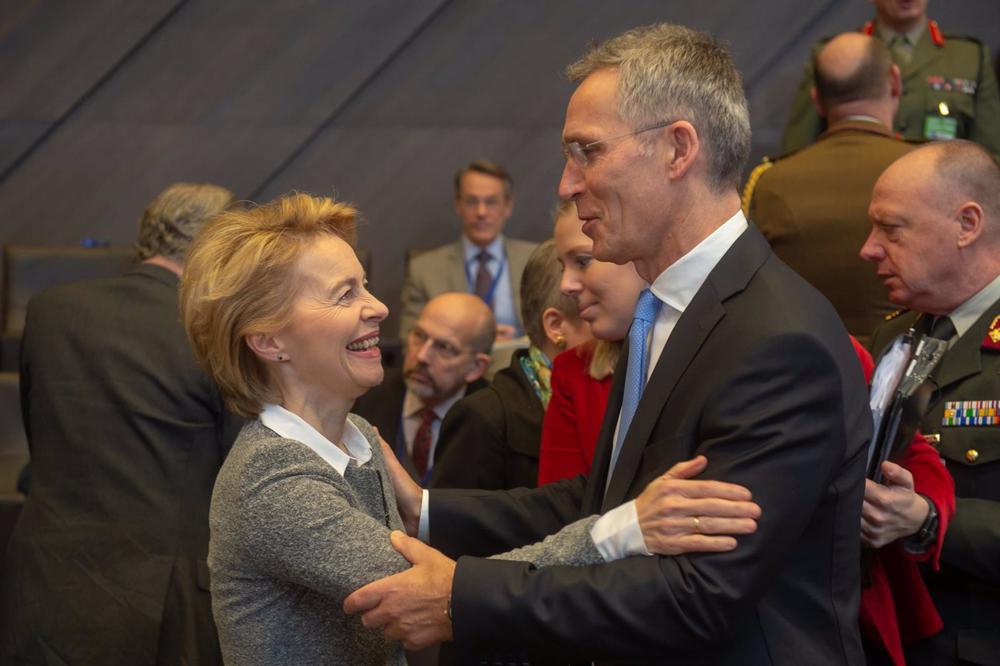
This was confirmed by the President of the European Commission, Ursula von der Leyen, at the start of Wednesday’s meeting of commissioners in Brussels, which was attended by NATO Secretary General Jens Stoltenberg, and which comes a day after the signing of a new joint declaration that strengthens the link between the two organizations and will guide relations in the coming years.
«We launch a new EU-NATO task force for critical infrastructure resilience, in which experts from both organizations will work hand in hand to identify threats, study strategic vulnerabilities, develop principles for improvement and propose measures to mitigate», has exposed the leader of the European Executive, who has pointed out that the initiative will focus on the transport sector, energy, Space and the digital field.
The idea is for European allies and partners to share information, to have early warning of threats and to be able to respond appropriately, she added. «The security of our infrastructures is something where we need to increase cooperation. We have seen the sabotage of Nord Stream which has shown that we have to be ready and confront these kinds of threats,» the German conservative defended.
Von der Leyen has linked this initiative to a global scenario in which the «competitors» of the EU and NATO use «all possible tools to damage security and seek to exploit values such as openness and exploit the interdependencies» of the West. «That is why it is important to strengthen our resilience in general,» he stressed.
For his part, NATO’s political chief pointed out that in the context of the war in Ukraine, Europeans have seen how Russian President Vladimir Putin uses energy as a weapon, so he defended this new initiative as «an important step to make societies stronger.»
Stoltenberg stressed the need for NATO and the EU to work together to increase the strength of critical infrastructures, technology and the supply chain in the face of potential threats and to be able to take measures to mitigate potential vulnerabilities of the European network.
Nearly eleven months into the military aggression launched by Russian President Vladimir Putin, the allied secretary general has insisted on increased military support for Kiev at a «key juncture» in the conflict, when fighting in eastern Ukraine has intensified. «This shows how vital it is to reinforce military backing. We need to do even more and even faster,» he has pointed out.
In this sense, Von der Leyen has advocated for greater military spending in Europe to make NATO stronger but also insisted that investment has to be made in a coordinated way, «spending better to avoid fragmentation and that we build interoperable forces and maintain a strong defense industrial base.»
Source: (EUROPA PRESS)