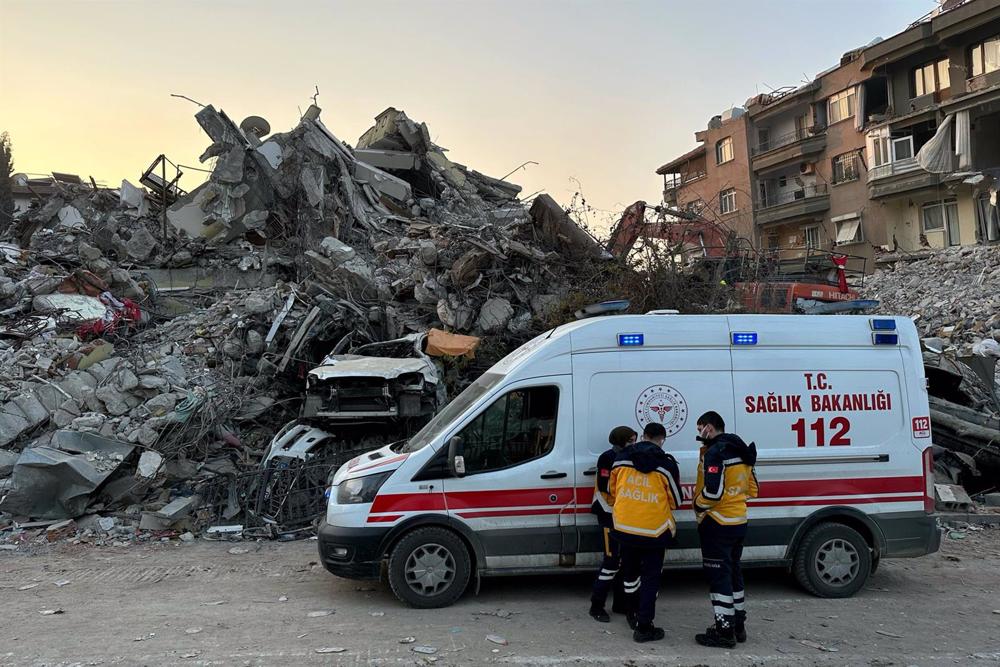
The death toll from last week’s earthquakes in southern Turkey, near the Syrian border, has risen to more than 36,200, according to the latest official figures, which put the number of dead on Turkish territory at more than 31,600.
The Disaster and Emergency Management Authority (AFAD), under the Turkish Ministry of Interior, has indicated in a statement published on its website that so far 31,643 deaths and 158,165 injured have been confirmed in the ten provinces affected by the earthquakes, which had their epicenter in Pazarcik, in Kahramanmaras.
It also stressed that since the first earthquake more than 2,700 aftershocks have been recorded and detailed that about 35,500 search and rescue workers are working in the area, including more than 9,700 from other countries.
Turkish authorities created an air bridge for the transfer of personnel and materials to the region, while 26 ships have been assigned to the region for support tasks, transfer of personnel and material and evacuation of the injured.
In addition, more than 200,000 tents and two million blankets have been sent to the affected provinces to support those affected. A total of 334 mobile kitchens and other support systems have also arrived in the area to provide food to those affected.
To this death toll must be added more than 4,500 dead in Syria, including 1,414 in government-controlled areas and some 3,160 in rebel-held areas in the northwest of the country, according to data from the Syrian Civil Defense, known as the ‘white helmets’.
However, the regional director of emergencies of the World Health Organization (WHO), Rick Brennan, said Sunday from Damascus that the agency estimates that at least 9,300 would have died in Syria — some 4,800 in areas controlled by the authorities and 4,500 in rebel-held areas — although he qualified that right now there is no way to make an accurate projection.
«We fear that these numbers are going to continue to increase, particularly as we get more access to these areas,» he said. For his part, the executive director of WHO’s emergency program, Michael Ryan, painted a catastrophic picture, estimating that Syria’s health system has been «pulverized» by ten years of instability and is now unable to provide adequate care.
Source: (EUROPA PRESS)