NATO allies agreed Wednesday to increase military production to manufacture more ammunition to supply Ukraine and replenish their own stockpiles in the face of the demands of the conflict in Eastern Europe.
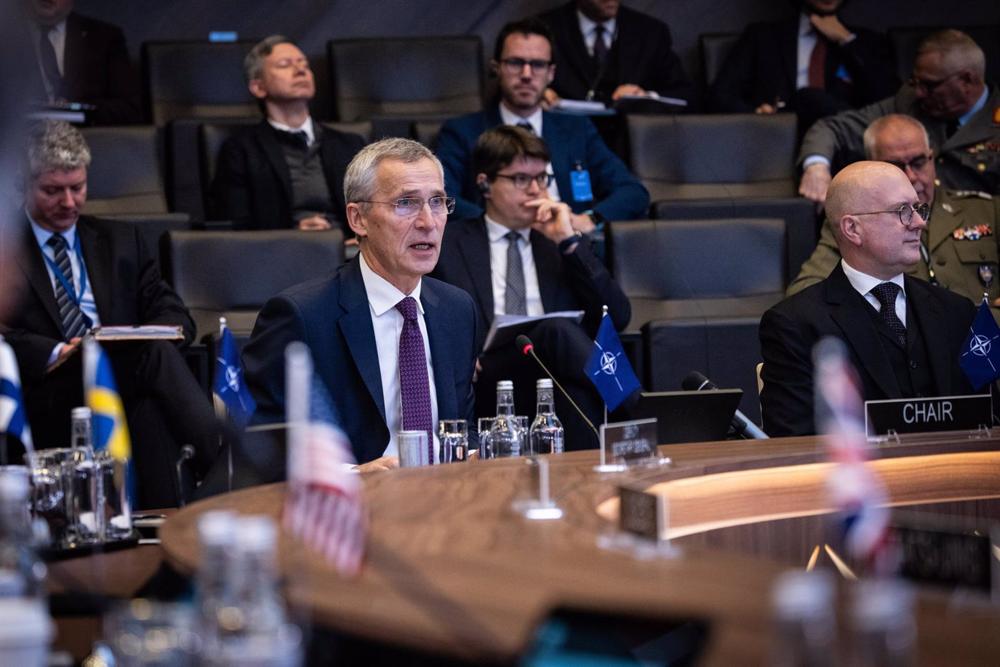
«The allies agree on the need to work hand in hand with the defense industry to increase our industrial capacity,» NATO Secretary General Jens Stoltenberg said at the press conference following the meeting of the bloc’s defense ministers.
According to NATO’s political chief, this need has existed since the end of last year, but now things are «moving in the right direction» following talks between the allies and with the arms industry that have resulted in contracts from France, the United States, Germany and Norway to increase production.
These contracts are linked to increased investment to enable production to be scaled up, something NATO says is already taking place and will benefit the aid the allies send to Kiev but will also serve to replenish its own arsenals.
«We have to continue and further increase production because there is a great need to provide ammunition to Ukraine,» said the allied secretary general, who warned that the conflict is becoming a «war of attrition» in which getting supplies to Ukraine will be key.
The former Norwegian prime minister noted that the military organization is reviewing its ammunition stockpile capacity targets and agreed on multinational projects to improve ammunition storage capacity and another on ground-based air defense. These projects are in addition to initiatives already underway to improve operational efficiency, economies of scale and connectivity between NATO allies and partners.
2% SPENDING BECOMES A FLOOR During the meeting, defense ministers discussed the question of a new military spending commitment with a view to reaching an agreement by the Vilnius summit in Lithuania. Then NATO hopes to renew the bar set a decade ago to reach 2 percent of GDP in defense spending, which now, according to Stoltenberg, should be a «floor and not a ceiling.»
«When we meet in Lithuania we will make a new commitment, today we have started discussions and what is obvious is that if it was right to commit to 2 percent in 2014, now it makes even more sense with the war in Ukraine,» he has assured, insisting that the current context and the threat posed by China forces the allies to increase military spending.
The ministers also had on the table the question of the defense of undersea infrastructures, a topic in vogue after the sabotage against the Nord Stream gas pipeline. In this regard, the allied ministers asked for recommendations and follow-up from NATO military authorities, which will set up a joint coordination cell headed by German General Hans-Werner Wiermann.
Source: (EUROPA PRESS)