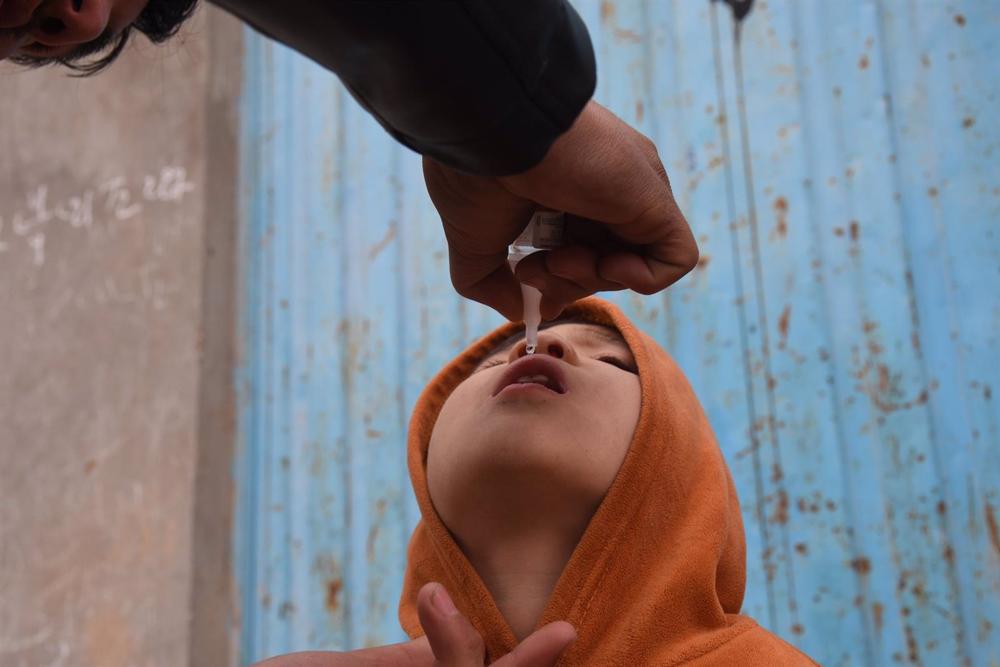
The World Health Organization (WHO) stressed Monday that Afghanistan has made «significant progress» in preventing the spread of the virus that causes polio in the country, with only two cases reported in the past year, compared to 56 in 2020.
A team of experts from the agency visited the country in June to conduct a nationwide assessment of the situation, after which it recommended improving surveillance and expanding it in areas considered to be at high risk to improve case detection. Following this, three observation posts were set up and a response was activated to vaccinate 1.4 million children in September after positive samples were detected.
«Monitoring is the eyes and ears of the polio program and environmental monitoring plays an important role in eradicating polio by enabling the program to detect the presence of the virus,» said Dr. Jushal Jan Zaman, who oversees this program for WHO in Afghanistan. «Environmental surveillance clearly tells us where transmission is likely to be taking place,» he argued.
The Taliban-installed authorities announced Monday the launch of a large-scale vaccination campaign aimed at immunizing seven million children in 26 of the country’s 34 provinces, as reported by the German news agency DPA. The campaign will run for the next four days.
Polio, a highly contagious disease that mainly affects children, is mainly transmitted by the fecal-oral route, according to the World Health Organization (WHO). The virus is endemic only in Afghanistan and Pakistan, after Nigeria declared its eradication in 2020.
Vaccination campaigns have faced difficulties in Afghanistan and Pakistan due to conspiracy theories that immunization causes infertility or that medical workers are spies, which has led to numerous attacks against them or agents who are deployed to reinforce their security. Before seizing power in 2021, the Taliban banned such campaigns in areas under their control.
Source: (EUROPA PRESS)