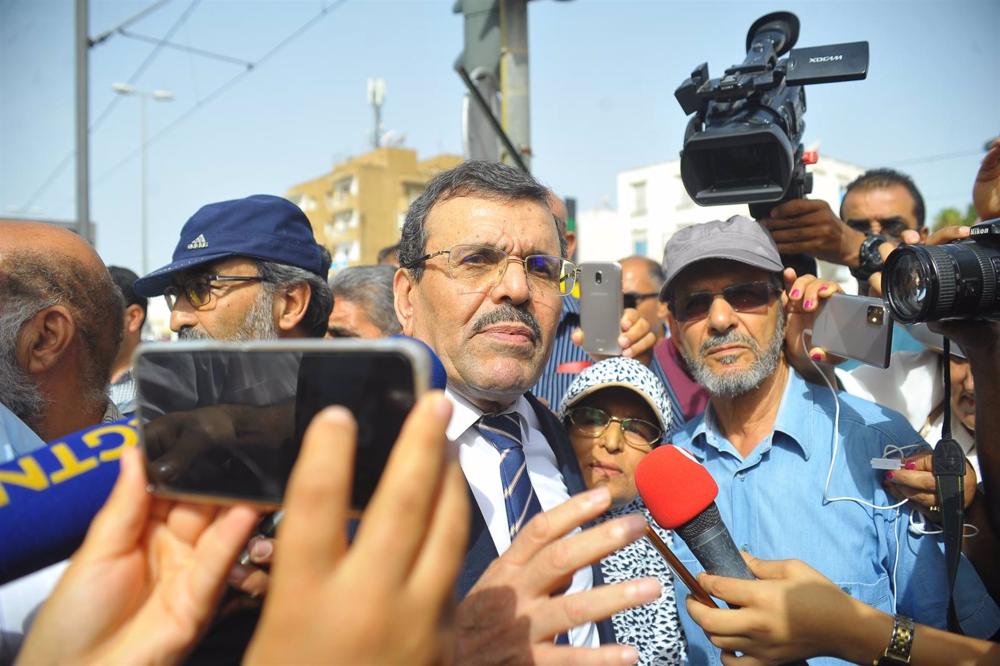
A Tunisian judge has issued an arrest warrant for former Prime Minister Ali Larayed, a senior member of the Islamist Ennahda party, as part of a case for allegedly sending jihadists to Syria.
The decision has been taken after Larayed, who was interior minister between December 2011 and March 2013, appeared before an investigating judge handling the case, Tunisian news portal Kapitalis has reported.
Larayed, who was prime minister between March 2013 and January 2014, already appeared in several hearings in September, when he came to be arrested in the framework of the case. The politician, vice-president of Ennahda, rejects the accusations against him.
Larayed himself branded after his release as «purely political» the judicial process opened against him and denounced a «policy of harassment» against the formation. The president of the dissolved parliament and leader of the Islamist party, Rachid Ghanuchi, has also been questioned in the framework of the investigations.
Thus, he argued that between 2012 and 2014 went through «the peak of the revolutions of the ‘Arab Spring’ and added that «taking advantage of this chaos, young Tunisians traveled to unknown destinations for multiple reasons, including studies, tourism and job search.»
In this regard, he pointed to the existence at that time of «an unprecedented drift at the security level», although he denied that the Tunisian authorities then had documents proving that these people traveled to conflict zones, including Syria.
Ennahda, the dominant force in the Parliament suspended in July 2021 by the President, Kais Saied, has been very critical of the President for the exceptional measures announced since that date, when he arrogated to himself all powers by dissolving also the Government.
The country held on Saturday a legislative elections marked by a historically low turnout – below nine percent – after the boycott of the opposition, which also called for non-participation in the constitutional referendum of July, which gives more powers to the Presidency and takes influence away from the Parliament.
Source: (EUROPA PRESS)