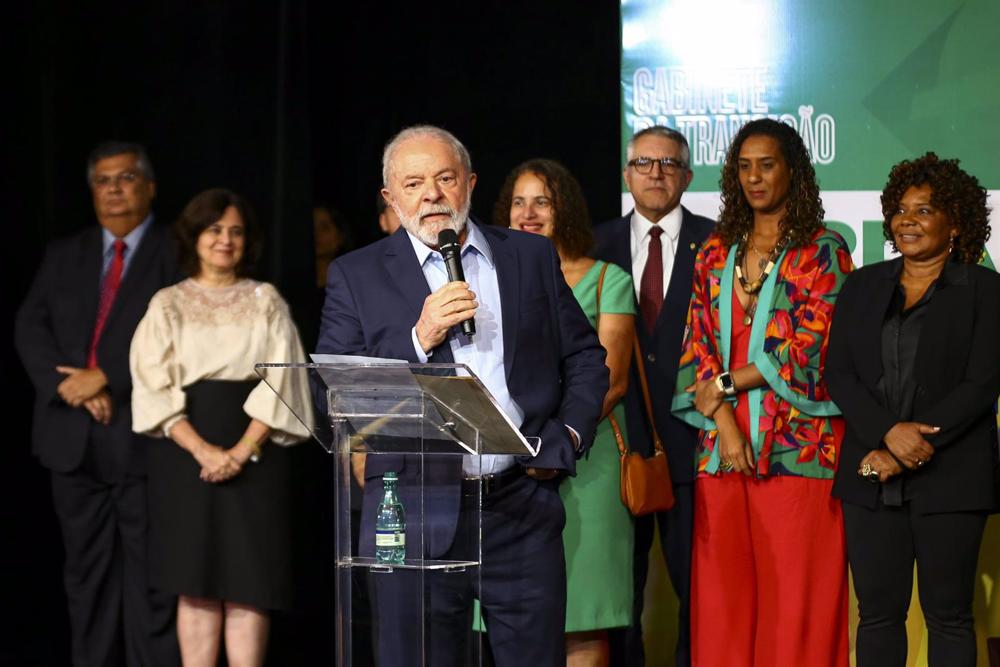
Brazil’s president-elect, Luiz Inácio Lula da Silva, has armored with representatives of the Workers’ Party (PT) the ministries that work next to his office in the Planalto Palace, thus reserving strategic spaces and following the tradition left by previous governments.
One of them is Rui Costa, the new Minister of Casa Civil -a sort of Prime Minister-, who left the Bahia government with high approval ratings and who has been chosen for his reputation as a good manager rather than for his political profile to lead an important portfolio through which the work of the rest of the ministries is coordinated.
In the Secretariat of Institutional Relations will be the federal deputy Alexandre Padilha, who will be responsible for all political negotiations of the next government, especially those with the Congress, in a context such as the current one in which conservative forces dominate. A man of Lula’s trust, he already held the position between 2009 and 2019 during the second term of the PT leader.
For his part, the vice-president and treasurer of the PT, Márcio Macêdo will be the new secretary general of the Presidency, so he will participate in the strategic discussions of the government, while the deputy Paulo Pimenta is the favorite to head the Secretariat of Communication of the Presidency, a ministry of strategic importance for its management of advertising funds.
It remains to be seen who will be in charge of the Cabinet of Institutional Security, the last office with the category of ministry whose headquarters is located in the Planalto Palace building.
With this decision, Lula reserves the power to count on his closest allies, although he could also give free rein to the discontent of those other parties that offered him their support during the elections, especially those formations more to the center of the political spectrum.
However, such maneuvering has been a constant in previous PT governments, both his own and that of former President Dilma Rousseff. The only exception was José Múcio, current Minister of Defense, who between 2007 and 2009 was elected to the Secretariat of Institutional Relations when he was a member of the conservative Brazilian Labor Party (PTB).
Source: (EUROPA PRESS)