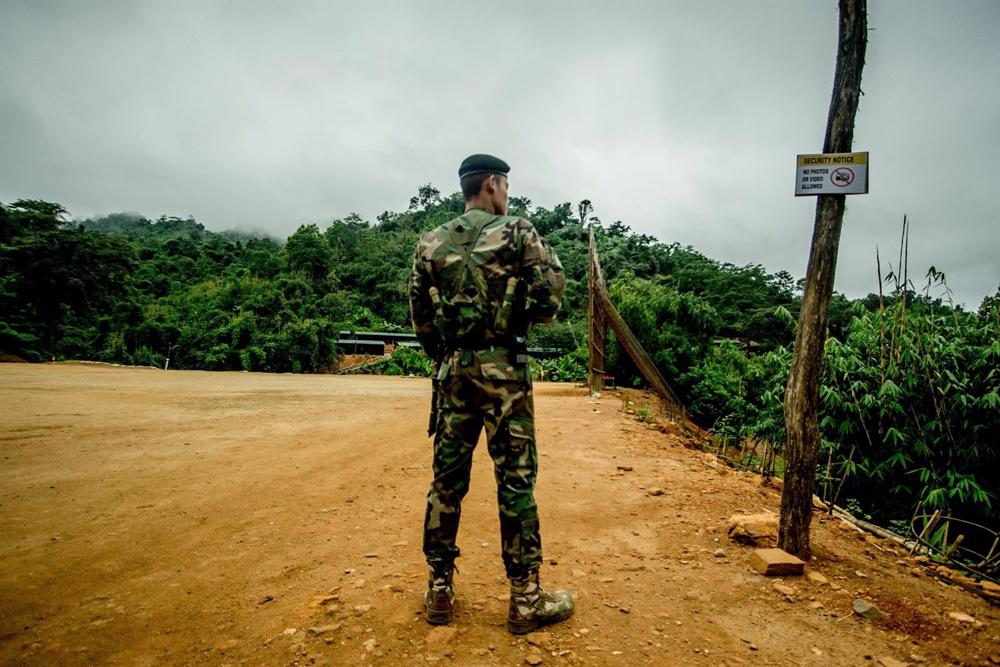
Militias and political forces opposed to the Burmese military regime fear that the ceasefire agreement reached between the military and the Arakan Army (AA) will allow the Army to redirect its efforts against the insurgency.
The ceasefire came into effect on November 26 with a provisional nature and with the declared objective of both parties to address the urgent humanitarian needs in the state of Rajine, in the northwest of the country.
The pact was reached thanks to the mediation of the president of the Japanese Nippon Foundation, Yohei Sasakawa, considered close to the head of the Burmese military junta, Min Aung Hlaing.
Sasakawa was already the mediator of the previous ceasefire agreed in view of the November 2020 elections. The agreement remained in force even after the February 2021 coup d’état that triggered the current civil war that pits the army against pro-democracy, revolutionary and ethnic groups.
However, fighting broke out again in Rajine in May after the Army began arresting civilians and imposed a trade blockade, the AA denounced at the time. Seven months later the parties have agreed to an interim ceasefire on humanitarian grounds.
Now the other rebel groups fear that the 40,000 military personnel sent to Rajine — according to AA figures — could be sent to other areas of the country, in particular to neighboring Chin states and the Magwe and Sagaing regions.
«This is an opportunity for the Army to muster forces. If the ceasefire holds for a while it could affect resistance forces in other areas,» a representative of the Yesagyo People’s Defense Force in Magwe, Ko Wai Gyi, told the Irrawaddy news portal.