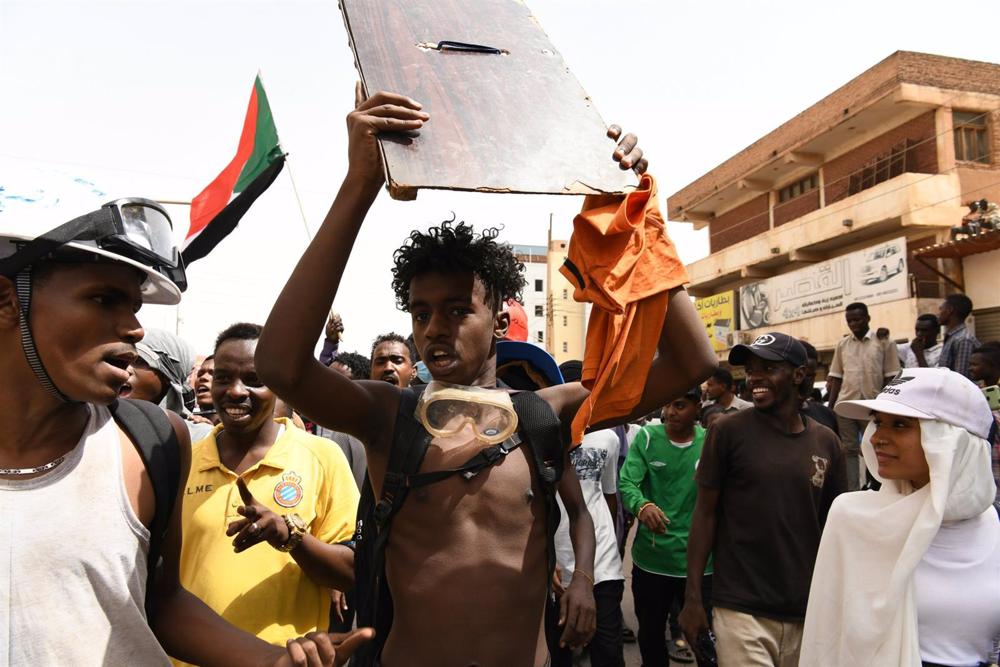
Sudan’s Islamist movements have expressed their rejection of the transitional framework agreement between the country’s military and civilian groups with a mass protest in the capital Khartoum on Saturday.
The march was organized by the «umbrella» group of the Sudan People’s Appeal, which denounced its exclusion from the talks between the civilian groups and the military, motivated in its view by the interference of the international community.
That is why the march in Khartoum ended in front of the headquarters of the United Nations Integrated Transition Assistance Mission in Sudan (UNITAMS) while chanting slogans against the Forces for Freedom and Change, considered as the main civilian group in the country.
«We are not political supporters of the army for the sake of it,» lamented Islamist Mohamed Ali al Jazuli, a member of the organizing committee Sudan People’s Call. «We will only side with them if they preserve Sudan’s sovereignty, its identity, and guarantee an independent transition, without sides,» he added in comments reported by the ‘Sudan Tribune’.
Al Jazuli, leader of the State of Law and Development Party, warned that if his demands were not met, the movement was ready to ask the army directly for help, according to the media.
The Forces for Freedom and Change pointed out that this agreement, which will be signed next Monday, seeks the transition to a civilian government in the country and after its signing will proceed to negotiate «several pending points» with the participation of all the actors interested in elaborating a transitional Constitution.
The military leader, Abdelfatá al Burhan, led in October 2021 a new coup d’état that overthrew the transitional Prime Minister, Abdalá Hamdok, appointed after an agreement between the previous military junta, which emerged after the 2019 coup against Omar al Bashir, and various civilian organizations and opposition political formations.
The signatories are to develop four documents on accountability and transitional justice, dismantling of the former regime, review of the Juba peace agreement and security reform.
«The parties that will sign are the Forces for Freedom and Change (FFC), the Sudanese Revolutionary Front led by Al Hadi Idris, the Popular Congress Party, the Democratic Unionist Party and professionals and civil society groups,» politician Yasir Arman told ‘Sudan Tribune’.
Thus, the transitional authority, including the cabinet and the Sovereign Council, will be composed entirely of civilians.
For its part, the organization of the Revolutionary Democratic Current of the Sudan People’s Liberation Movement has stated that it expects the political prisoners to be released before the signing, as it stipulates the «end of violence against the mass movement», the release of detainees and a transformation of the media in favor of civil democracy.