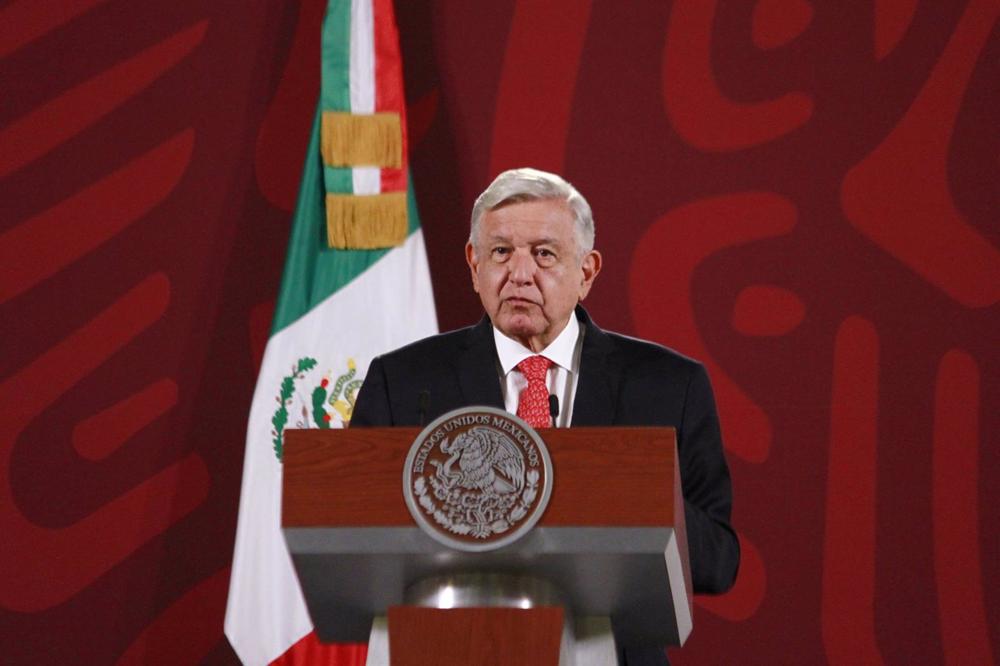
The NGO Human Right Watch (HRW) warned Tuesday that the Mexican government’s proposal to amend the country’s Constitution to reform the country’s electoral system could «seriously» undermine the independence of electoral authorities, putting free and fair elections at risk.
The proposal by Mexican President Andrés Manuel López Obrador would remove many of the safeguards intended to preserve the independence of the two national authorities tasked with overseeing all elections, the National Electoral Institute (INE) and the Electoral Tribunal of the Judiciary of the Federation (TEPJF), according to the organization.
Congress is expected to discuss and vote on the proposal before the end of the current legislative session on December 15, 2022.
«President López Obrador’s proposed changes to the electoral system would make it much easier for any party in power to co-opt the country’s electoral institutions to remain in power,» HRW Mexico researcher Tyler Mattiace has argued.
«Given Mexico’s long history of single-party rule maintained through questionable elections, it is extremely problematic for lawmakers to consider a highly regressive proposal that would weaken the independence of the electoral authority,» Mattiace added.
Under López Obrador’s proposal, it would eliminate all state electoral institutes and state electoral tribunals, the independent authorities that administer most state and local elections and enforce campaign rules as well as resolve electoral disputes.
Their responsibilities would be transferred to INE and TEPJF, which would become the sole arbiters of all elections in Mexico.
The proposal would also change the way in which the governing members of the National Electoral Institute and the Federal Electoral Tribunal are appointed, eliminating safeguards designed to ensure their independence from the government.
The proposal would shorten and unify the members’ terms so that all governing members of both electoral authorities would be appointed at the same time, in the same process, during each six-year presidential term. Currently, these officials serve staggered nine-year terms and are appointed in separate selection processes by different officials in different years, the NGO has detailed.
«Reducing the number of authorities responsible for administering elections and making it possible to appoint all election officials at the same time would make it much easier for the government to influence the selection process, which could undermine the independence of election authorities,» the statement released by Human Right Watch wields.
For the organization, Mexico’s current electoral system, which includes «many safeguards to protect the independence of electoral authorities,» is the result of decades of reforms that began with the creation of INE in 1990 and led to the end of single-party rule in 2000.
For much of the 20th century, one political party controlled almost all of Mexico’s public institutions. The government organized periodic elections, which were generally not considered free and fair, and almost always retained power.
The president’s proposal would also eliminate the constitutional mandate for the National Electoral Institute, rather than the government, to administer the electoral registry as well as the official list of registered voters.
«The possibility that the electoral registry could be transferred to government control could contravene Mexican law and international standards for the protection of personal data. These standards prohibit organizations that hold personal information, such as names, photos and fingerprints, from sharing that information without the express permission of the individuals whose data could be transferred,» HRW added.
«Every country is obligated under international law to protect the right of citizens to vote and participate in the conduct of public affairs by ensuring that there is an independent electoral authority that can oversee elections in a fair and impartial manner,» the organization warned in its letter.