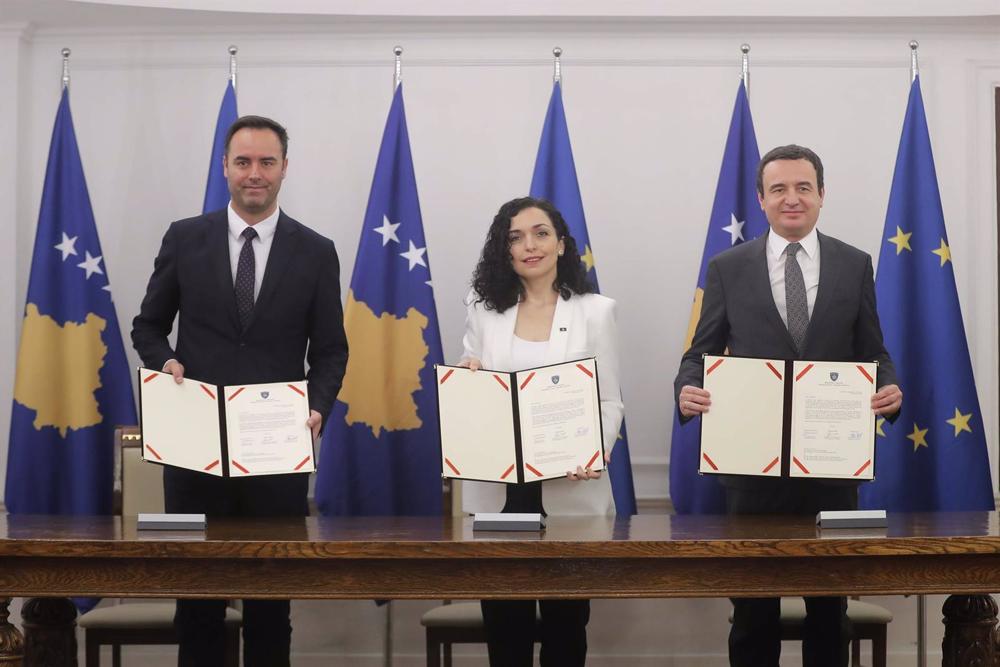
The main political leaders of Kosovo have signed this Wednesday the application for EU membership of the former Serbian province, on a day that they have described as «historic» and that opens a «long road» not without obstacles, since today five countries, including Spain, do not recognize its independence.
The Kosovar Prime Minister, Albin Kurti, has advocated for internal unity to overcome «obstacles», while the Kosovar President, Vjosa Osmani, has assumed during the ceremony that accession is a «long-term» goal, according to Kosova Press.
However, Osmani considers that Kosovo is now «one step closer to fulfilling the dream of those who sacrificed their lives for freedom, independence and democracy», as she has exposed on Twitter next to a photo in which she appears with Kurti and the president of the Parliament, Glauk Konjufca.
EU rules stipulate that once a membership request arrives at the Council, the country holding the rotating presidency must inform the other member states and also the European Parliament. It is then up to the foreign ministers to assess the case and decide whether to seek the opinion of Brussels.
Pristina’s move coincides with the recent escalation of tensions on the border with Serbia, initially over the entry into force of a new license plate regulation and, in recent days, over the postponement of local elections and the arrest of a policeman.
Belgrade, which has raised the possibility of deploying police and military in Serb-majority Kosovar areas, had already warned that it would contact EU governments to block any aspirations of Pristina. The Serbian government is particularly confident in the role of countries that do not recognize Kosovo’s independence, declared unilaterally in 2008.