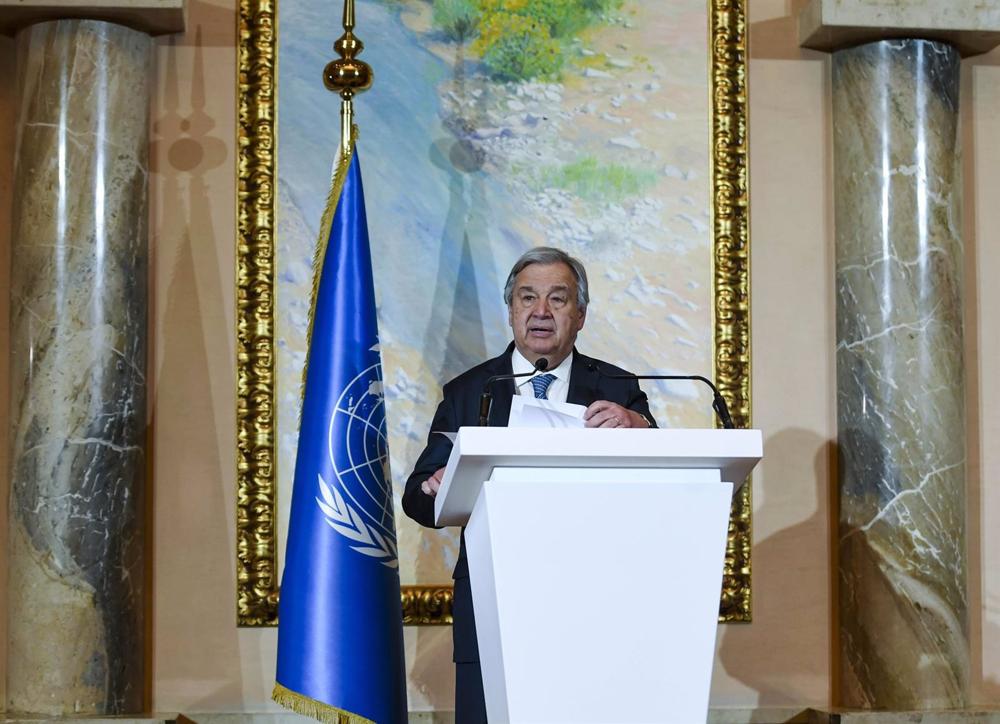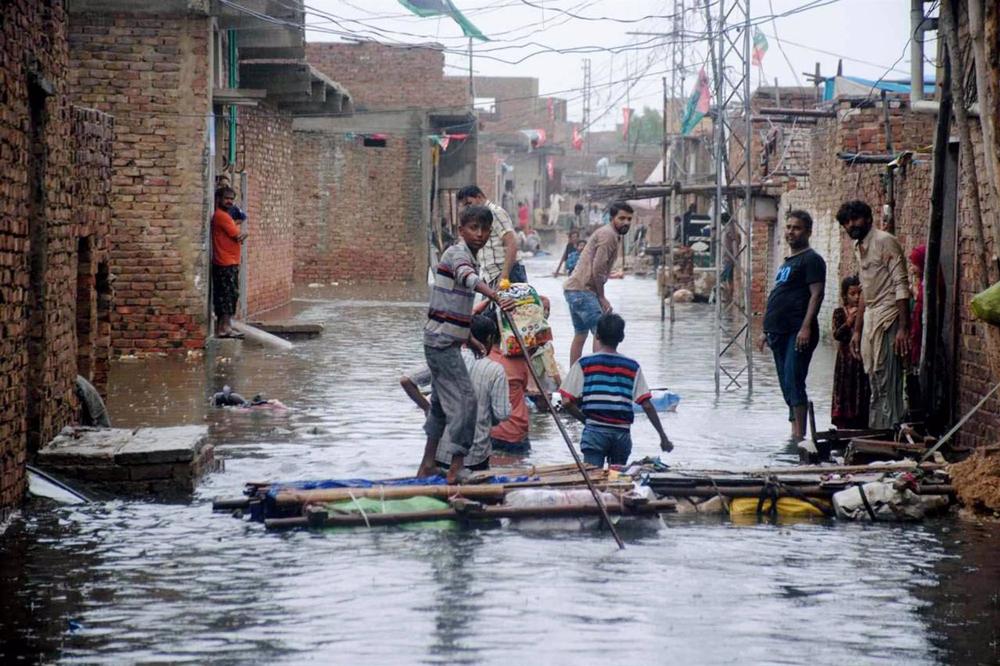
UN Secretary-General António Guterres on Monday defended the need for «unprecedented reform» of the global financial system to address climate change and the disasters it causes, such as last summer’s deadly floods in Pakistan.
«If there is any doubt about the loss and damage it causes, go to Pakistan. There is loss. There is damage. The devastation of climate change is real. From floods to droughts to cyclones to torrential rains. And, as always, the countries least to blame are the first to suffer,» Guterres said in his address to the International Conference on Climate Resilient Pakistan in Geneva on Monday.
In particular Guterres has referred to the international banking system and the need to reform it «to right a fundamental wrong.» «Pakistan is being doubly victimized by climate chaos and a global financial system that is morally bankrupt,» he said.
«That system routinely refuses middle-income countries debt forgiveness and the provision of financing needed to invest in resilience to natural disasters. We need to find creative ways for developing countries to access debt relief and financing because they need it most,» he said.
The administrator of the United Nations Development Program (UNDP), Achim Steiner, pointed out other extraordinary events resulting from climate change: «look to the east, to Austria, floods; look to the west, to California, extreme weather; look to Europe and people wondering why it doesn’t snow in winter. We are living in times of profound change.
PAKISTAN Guterres has put the cost of meeting the most basic needs of communities affected by monsoon rains in Pakistan at «more than $16 billion» and «much more will be needed in the long term,» he warned.
Guterres met with the Prime Minister of Pakistan, Shehbaz Sharif, and defended that the reforms they are demanding are not a question of aid, but of justice. Not just a gesture of solidarity. However, the head of the UN has expressed his «deep frustration» that world leaders «are not giving the necessary response to this life and death emergency».
The United Nations Children’s Fund (UNICEF) has warned that the «up to four million children continue to live near polluted or stagnant water that threatens their survival and well-being» while acute respiratory infections «have skyrocketed» in flooded areas. The number of children suffering from acute-severe malnutrition has also doubled and 1.5 million are in need of life-saving intervention.
More than 33 million people were affected by last summer’s monsoon floods in Sindh and Balochistan and the floodwaters have not yet receded from all flooded areas. Eight million people remain displaced and the death toll is more than 1,700.
The storms left more than 2.2 million homes destroyed, as well as 13 percent of health facilities, 4.4 million acres of crops and more than 8,000 kilometers of roads.
Source: (EUROPA PRESS)