The Ethiopian government assured early Friday that the Ethiopian Armed Forces (ENDF) control 70 percent of the Tigray region.
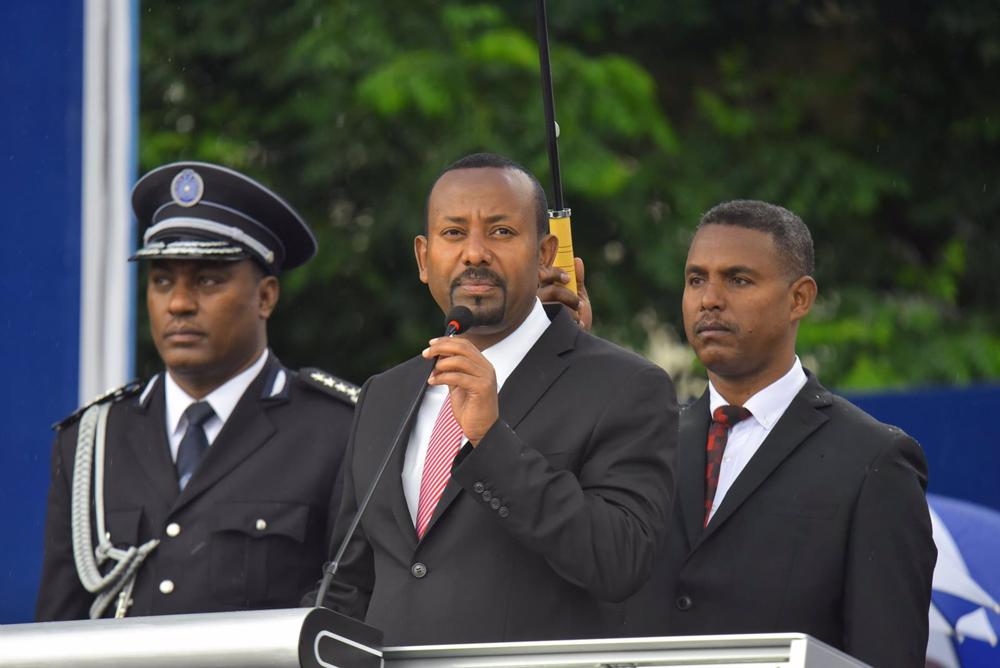
The National Security Advisor to Prime Minister Abiy Ahmed, Redwan Hussien, explained via Twitter that the national army controls a large part of the northern region of Tigray, following the cessation of hostilities agreement reached last week with the Tigray People’s Liberation Front (TPLF).
The TPLF, for the time being, has not commented on this claim by the central government.
In this regard, Hussien said that «aid is flowing as never before, even in the areas not yet in the hands of the ENDF».
«The (peace) agreement only offers opportunities to improve services,» he asserted after indicating that more than thirty trucks of food and three trucks of medicines have arrived in the region. «There is no obstacle in terms of aid,» he added.
In addition, he also clarified that services are being reconnected, while flights are operational again.
The day before, Selamawit Kasa, one of the spokespersons of the Federal Communications Service, indicated that the agreement with the TPLF has allowed the implementation of «humanitarian support» and «reconstruction» works in the Tigray region.
On Monday, contacts began in the Kenyan capital, Nairobi, between senior military officials of the army and the TPLF to discuss the cessation of hostilities agreed last week, as confirmed by the African Union (AU), which is carrying out mediation work.
The conflict in Tigray erupted in November 2020 following a TPLF attack on the army’s main base in Mekelle, after which the government of Prime Minister Abiy Ahmed ordered an offensive against the group following months of political and administrative tensions, including the TPLF’s refusal to recognize an election postponement and its decision to hold regional elections outside Addis Ababa.
The TPLF accuses Abiy of whipping up tensions since coming to power in April 2018, when he became the first Oromo to accede to office. Until then, the TPLF had been the dominant force within Ethiopia’s ruling coalition since 1991, the ethnically-supported Ethiopian People’s Revolutionary Democratic Front (EPRDF). The group opposed Abiy’s reforms, which it saw as an attempt to undermine its influence.