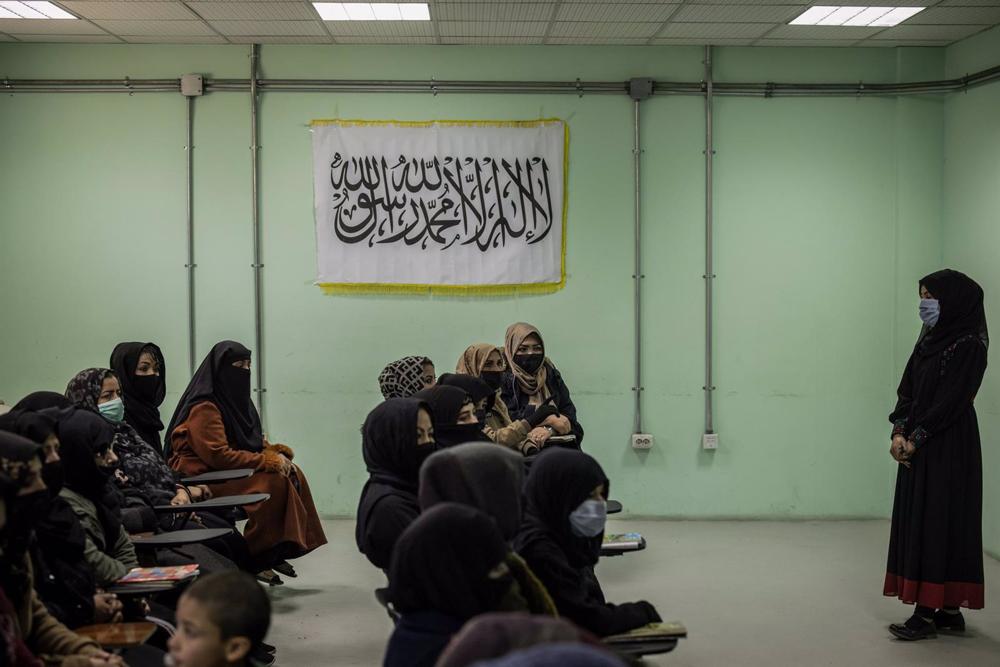
The Taliban-installed authorities in Afghanistan stressed Monday that they are «not against» girls and women receiving education, despite having banned them from attending high school and university classes amid their restrictions on the role of women in public life.
Afghan Deputy Prime Minister Maulavi Abdul Kabir stressed that the Taliban are working to «put an end» to the situation «as soon as possible» and added that Afghanistan «is the common home of all Afghans,» according to the Afghan news agency Bajtar News.
Kabir’s words came during a meeting with representatives of private universities who have expressed the need to allow female students to return to class and to strengthen the education system to boost the country’s progress.
On the other hand, Taliban spokesman and Afghan Deputy Information Minister, Zabihullah Mujahid, has called on the United States to «stop interfering in the internal affairs» of Afghanistan after Washington’s criticism of the ban on women working for government organizations.
«All institutions that want to operate in Afghanistan are obliged to comply with our country’s rules and regulations. We will not allow anyone to say stupid things or make threats about the decisions of our leaders under the argument of humanitarian aid,» he said on his Twitter account.
U.S. Chargé d’Affaires for Afghanistan Karen Decker on Sunday called on the Taliban to «explain how they are going to distribute humanitarian aid to women and children in the absence of female personnel,» amid international criticism against the group for this decision.
Earlier on Monday, the acting head of the United Nations Assistance Mission in Afghanistan (UNAMA), Ramiz Alakbarov, met with Afghan authorities to demand that they withdraw their decision to ban women from working for non-governmental organizations. «Millions of Afghans need humanitarian aid and removing the barriers is crucial,» the mission has said.
The decision was announced on Saturday by the Afghan Ministry of Economy and affects all national and international non-governmental organizations. Thus, although it does not directly affect the UN, it makes many of its aid programs impossible, as they are carried out by NGOs affected by the measure.
Source: (EUROPA PRESS)