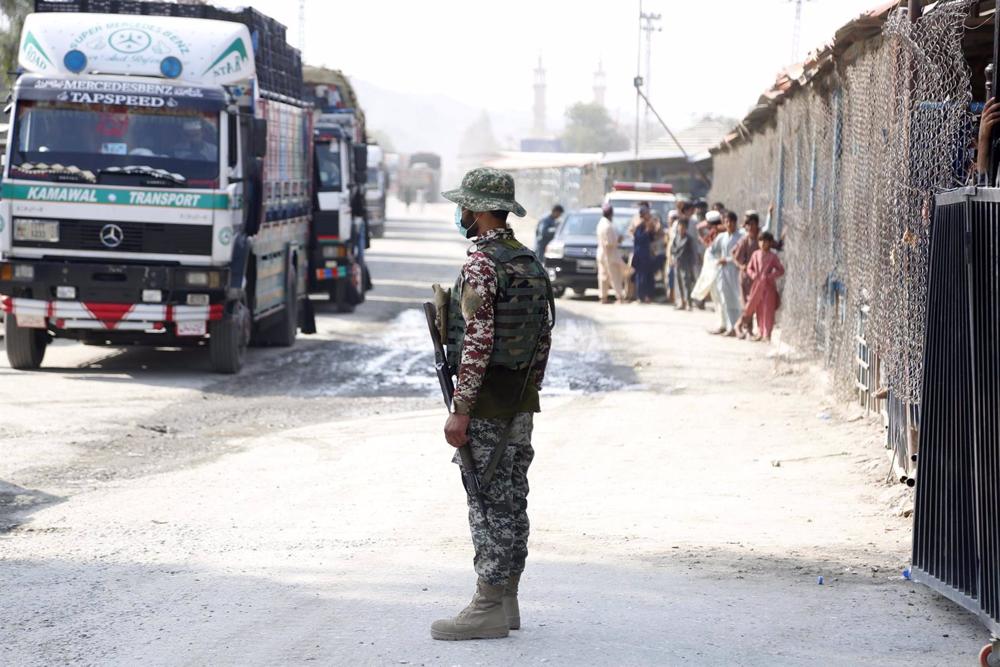
Pakistani authorities have decided Friday to step up anti-terrorist operations against the Tehrik-i-Taliban Pakistan (TTP) group, which has recently stepped up its attacks after breaking a truce in November amid contacts with Islamabad.
Sources quoted by the Pakistani television channel Geo TV have indicated that the National Security Committee has held a meeting headed by the Prime Minister, Shehbaz Sharif, to determine its anti-terrorist strategy in the face of the wave of attacks.
The meeting was attended by the Ministers of Defense, Interior, Finance and Foreign Affairs, Jauaja Muhamad Asif, Rana Sanaullah, Ishaq Dar and Bilawal Bhutto Zardari, respectively, as well as senior officials of the army and security forces.
The meeting was held after the Pakistani Army assured on Wednesday that it will «eliminate the threat» posed by the TTP, a group that has between 7,000 and 10,000 fighters, according to figures recently provided by Sanaullah in an interview with the Pakistani newspaper ‘Dawn’.
Sanaullah said that active members of the armed group, known as the Pakistani Taliban, include some who have laid down their arms, before adding that they are accompanied by some 25,000 family members and criticizing authorities in the Khyber Pakhtunkhwa region for failing to contain the threat.
«The main reason is the failure of the Jíber Pajtunjua government (…) It is their job to stop them,» he said, in a criticism of the regional authorities, led by former Prime Minister Imran Jan’s party. Finally, he denounced that the group has been reinforced by the success of the Afghan Taliban, who seized power in August 2021 in the neighboring country.
The situation has led Pakistan to call on the Afghan Taliban, who mediated during contacts for a possible peace agreement, to address the upsurge in TTP activities. In fact, Bhutto Zardari remarked last week that Islamabad «will not turn a blind eye if it is found that the Taliban are not stopping the TTP».
Pakistan’s National Counter-Terrorism Authority claimed last week that the TTP group expanded its networks during peace talks with the government and added that the U.S. withdrawal from Afghanistan allowed it to increase its activities in the neighboring country, nearly two weeks after the armed group announced the end of the ceasefire.
The TTP, which differs from the Afghan Taliban in organizational matters but follows the same rigorist interpretation of Sunni Islam, brings together more than a dozen Islamist militant groups operating in Pakistan, where they have killed some 70,000 people in two decades of violence.
Source: (EUROPA PRESS)