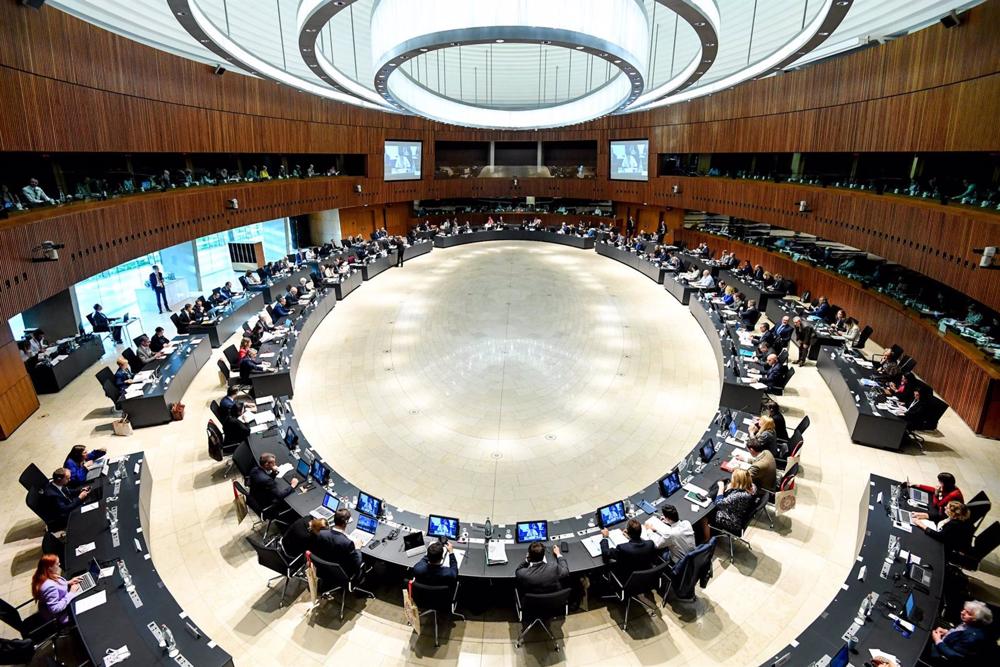
European Union foreign ministers will seek Monday to approve a new batch of 500 million euros from the fund to supply armaments to Ukraine, at a meeting where the bloc will approve new sanctions against 37 individuals and entities responsible for the crackdown on pro-democracy demonstrations in Iran.
Faced with the majority intention of the member states to approve a new round of 500 million, the seventh since the beginning of the war, to cover the arms shipment to Ukraine, Hungary is threatening to veto the decision, in a new front in its rejection of the measures to support Ukraine and to increase pressure on Russia.
«We are looking for a political agreement this Monday, if not then it will happen sooner rather than later,» said a senior EU official, downplaying Hungary’s possible blockade. This new scheme will bring to 3.5 billion the funds made available to the EU to provide lethal material to Kiev in the context of the war, and is part of the more than 11 billion euros that Europe has offered in military support to Ukraine.
In addition, the EU High Representative for Foreign Policy, Josep Borrell, hopes to receive the approval of the EU-27 to finance with 45 million the training mission of Ukrainian soldiers on European soil.
With a view to reaching an agreement in February, the EU-27 will continue talks on the tenth package of sanctions against Moscow, with the first contacts over the weekend.
Although, diplomatic sources first expect a «substantial» proposal from the European Commission. «It is no secret that some countries already want the tenth package,» they explained, pointing out that the next steps may be to extend the oil price cap to include oil products.
SANCTIONS AGAINST IRAN AND DEBATE ON THE REVOLUTIONARY GUARD The decision to redouble sanctions against Iran for the regime’s continued crackdown on pro-democracy protests following the death of young Masha Amini appears to be more clear-cut. The EU is concerned about the spiral of violence unleashed by Tehran and will therefore apply the fifth consecutive round of sanctions against the Iranian authorities, adding to its ‘black list’ 37 people responsible for the persecution of the demonstrators.
On the table will be the debate on designating the Iranian revolutionary guard as a terrorist organization for the EU, an issue that countries such as Germany are pushing for but which does not command the consensus of the Twenty-Seven and on which there is no formal proposal.
Tehran has threatened that this step will bring «devastating consequences» for the nuclear agreement that the EU has been seeking to revive for months, trying to get the United States to return to the pact and Iran to commit to its full compliance.
Despite defending the EU’s independence in responding to Iran’s actions, both domestically and in its military support for Russia, the senior European official has opined that «it is not a good idea» to add the Iranian revolutionary guard to the terrorist list stating that it «prevents progress on other issues» with Tehran.
NEW SITUATION IN VENEZUELA During the meeting of foreign ministers, Borrell will also open a debate on the new situation opening up in Venezuela, where the EU aims to recalibrate its position taking into account the changes at regional and national level, following the dismissal of Juan Guaidó as ‘commissioned’ president and the increased presence of Nicolás Maduro’s regime in the international sphere.
Diplomatic sources explain that the idea is to revive the contact group with Venezuela to resume relations with Caracas and try to influence a democratic way out of the crisis.
Source: (EUROPA PRESS)