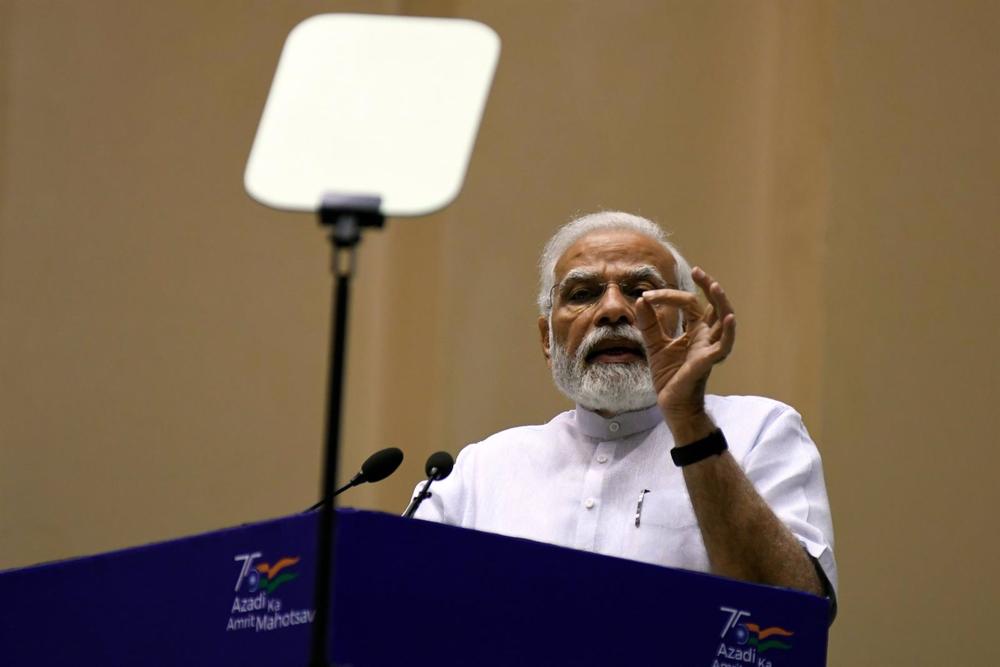
Indian authorities on Monday resorted to «emergency legislation» under technology and information regulations in an attempt to veto a BBC documentary on Prime Minister Narendra Modi about the Gujarat riots in 2022, where nearly 1,000 Muslims were killed.
The government has ordered social media platforms to block links to the documentary, titled ‘India: The Modi Question’, which has been described by the authorities as a «propaganda piece without objectivity that reflects colonialist thinking».
Thus, the dissemination of the documentary through Twitter or YouTube has been banned, according to information from the newspaper ‘The Times of India’. The case has sparked controversy in the country, especially in relation to the first part of the documentary, which is based on a series of memos showing how Modi’s attitude was criticized by the international community when he was chief minister of Gujarat and the upsurge of violence took place.
Modi has been repeatedly accused of being complicit in the riots that took place after 59 Hindu pilgrims were killed in a fire in a train passing through the town of Godhra. This led to severe reprisals lasting several days against the Muslim minority in the region, who were blamed for the incident.
The most conservative estimates put the death toll at just over 1,000, mostly Muslims. There were more than 200 missing and another 2,500 injured. A subsequent commission set up by the Gujarat government said the fire was arson and a court convicted 31 people, all Muslims, of involvement in the burning of the train.
The first part of the tape was aired on Tuesday last week in the UK, but it has not been aired in India, where the content of the tape has been circulated on social media. Hundreds of judges and senior officials have accused the BBC of having an «imperialist vision» and of trying to provoke new tensions between Hindus and Muslims.
However, the British channel has stressed that the documentary is «rigorously contrasted and has the highest journalistic standards». The Indian opposition has condemned the government’s decision, accusing it of using «censorship».
Source: (EUROPA PRESS)