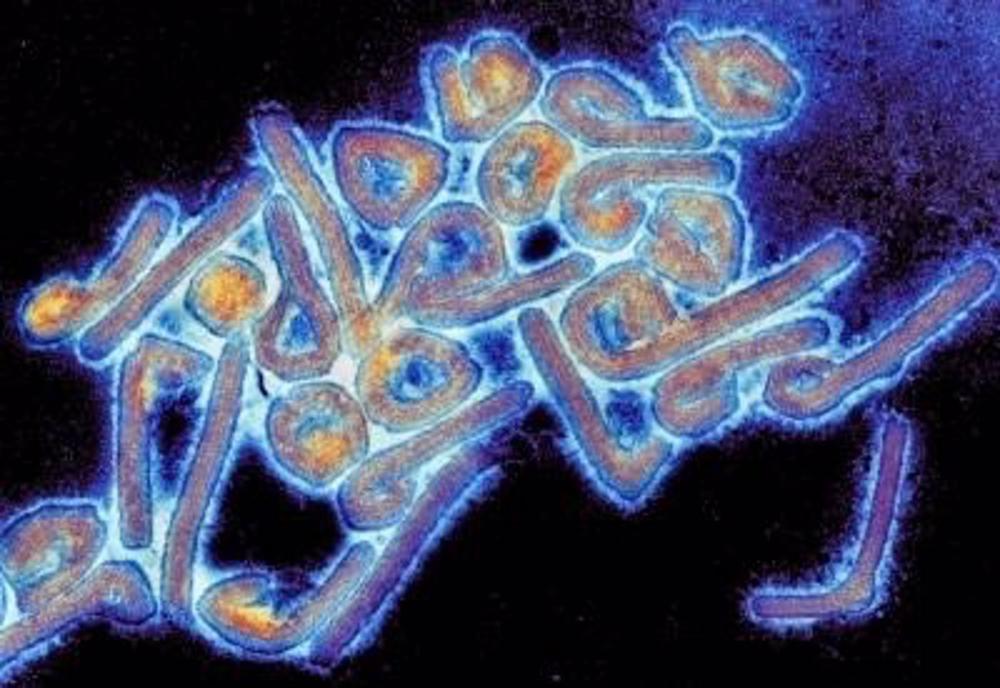
The Government of Equatorial Guinea has declared a health alert due to the Marburg virus after confirming an outbreak of this disease, similar to Ebola, in the provinces of Kié Ntem and Wele Nzas.
The Equatoguinean Ministry of Health said in a statement that an «unusual epidemiological situation» was detected in districts of Nsok Nsomo after the death of several people who presented fever, decay, vomiting and bloody diarrhea.
«We regret to report the death of a suspected case on February, located in the district of Ebiyeyin and who remained in isolation, under observation and treatment at the provincial hospital in this district,» it said.
He specified that «these deaths had been initially identified by the investigation carried out by the district office of Salid de Ebibeyin through the focal point formed in epidemiological surveillance for the early detection of these cases, which identified the outbreak and notified the ministry on February 7».
«We proceed to clarify that the epidemiological investigation conducted by the technical team of experts from the Ministry of Health and the World Health Organization (WHO) from February 9 to 12 confirmed that two of the ten deaths are not related to the event because they do not meet the epidemiological or clinical criteria of the case.»
Therefore, he pointed out that so far there have been nine confirmed deaths, 16 suspected cases -fourteen asymptomatic and two with mild symptoms–, 21 people isolated and monitored in their homes for having been second-order contacts of the deceased and 4,325 people quarantined in their homes.
«The movement restriction applied to the district of Kié Ntem is maintained, according to the surveillance and control measures established by the Government», he said, before adding that he considers «extending» these movement restrictions and «implementing the contingency plan to face the pandemic».
In this sense, he pointed out that the Ministry of Health, «in coordination with the WHO and the Centers for Disease Control and Prevention of the United States (CDC)», has reactivated the laboratory of the Public Health Research Institute for Viral Diseases at the La Paz Medical Center in Sipopo.
Finally, he assured that «it is carrying out solid work strategies to investigate, safeguard and protect the health of the population living in Equatorial Guinea» and stressed «the importance of using the available means of communication in a responsible manner and of disseminating only official information to collaborate with the management of the epidemiological emergency that is currently being faced».
WHO has confirmed that Equatoguinean authorities sent samples to the agency-supported Institut Pasteur reference laboratory in Senegal, one of which tested positive. «Investigations are ongoing,» it said in a statement.
«Advanced teams have been deployed in the affected districts to trace contacts, isolate and provide medical care to people showing symptoms of the disease,» he said, while outlining that WHO has deployed «experts in epidemiology, case management, infection prevention, laboratory and risk communication.»
The WHO regional director for Africa, Matshidiso Moeti, recalled that the Marburg virus «is highly infectious». «Thanks to the swift and decisive action of the Equatoguinean authorities in confirming the disease, the emergency response can reach its maximum quickly to save lives and stop the virus as soon as possible,» she concluded.
During the day on Friday, Cameroonian authorities imposed a movement restriction on the border with Equatorial Guinea citing «multiple unexplained deaths» due to «a hemorrhagic fever» in several localities of Kié Ntem. The Cameroonian Ministry of Health stressed that it launched «multi-sectoral investigations» in the risk areas «in collaboration with teams from Equatorial Guinea».
Symptoms of the virus include headache, vomiting of blood and muscle aches. The disease is transmitted through contact with infected blood or other body fluids and tissues. There are no vaccines or approved antiviral treatments to treat the virus, which has a mortality rate of 88 percent.
In Africa, previous outbreaks and sporadic cases have been reported in Angola, Democratic Republic of Congo (DRC), Kenya, South Africa and Uganda. Guinea confirmed a case in August 2021 in Gueckedou, while Ghana confirmed two cases in July 2022.
Source: (EUROPA PRESS)