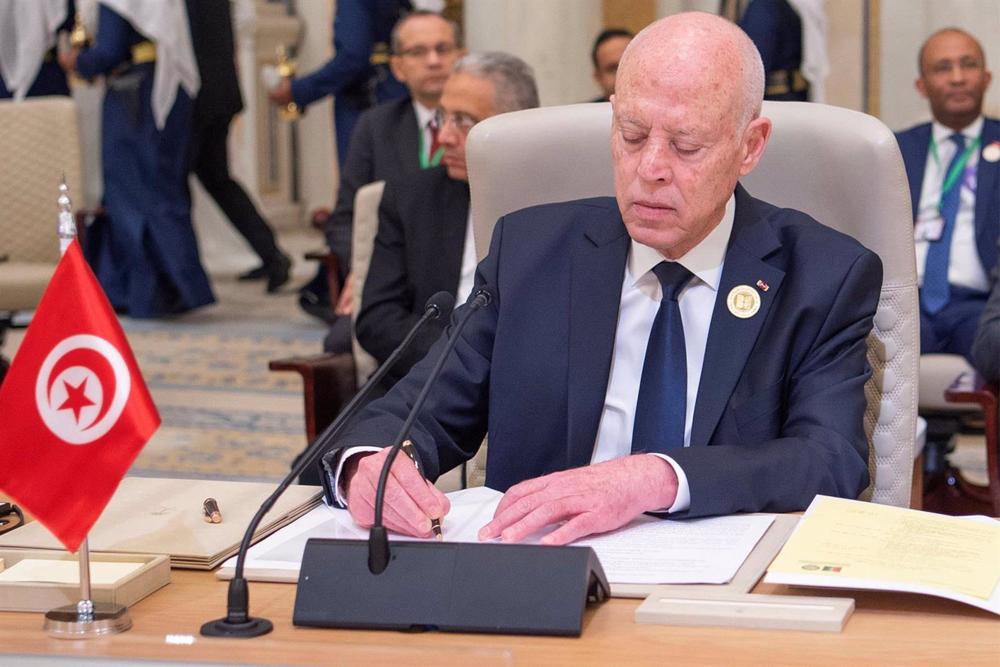
The Tunisian government has rejected «hasty» and «impertinent» international criticism of the latest arrests of opponents in the country, amid allegations of an authoritarian drift by President Kais Saied, and stressed that they «undermine the independence» of the judicial apparatus.
Tunisian Foreign Minister Nabil Amar has indicated in declarations granted to the Tunisian state news agency, TAP, that the criticisms of «some foreign parties» are «inaccurate» and has defended that the arrests are part of «serious cases» affecting «national security».
He stressed that these arrests «have nothing to do with political or human rights activities». «Political activists and human rights defenders remain responsible citizens who enjoy all their rights,» he said.
Amar has conveyed to «certain parties» that Tunisia has never commented on legal proceedings in other countries against businessmen, politicians, parliamentarians or journalists, while rejecting «any interference» in the country’s internal affairs and any attempt to «influence» the judicial apparatus.
For his part, Saied pointed out that the authorities «respect Human Rights», although he argued that «when it is a plot against the State, it is no longer a question of rights». In this line, he reiterated his denunciations of alleged activities to «divide the State», as reported by the Tunisian radio station Mosaique FM.
The reaction of the Tunisian authorities comes after criticism in recent hours by the United Nations and the European Union (EU) of the campaign of arrests of opponents including Nurredin Bhiri, a senior member of the Islamist party Ennahda, and Zahr al Akram. The director of the Mosaique FM radio station, Nurredin Butar, is also among those arrested.
Saied has pushed through a series of measures to reform Tunisia’s political system, including a constitutional referendum, approved amid opposition boycott, which strengthens the powers of the presidency. The opposition has denounced an authoritarian drift of the president and has demanded his resignation, especially after the very low turnout in the legislative elections of December and January.
Source: (EUROPA PRESS)