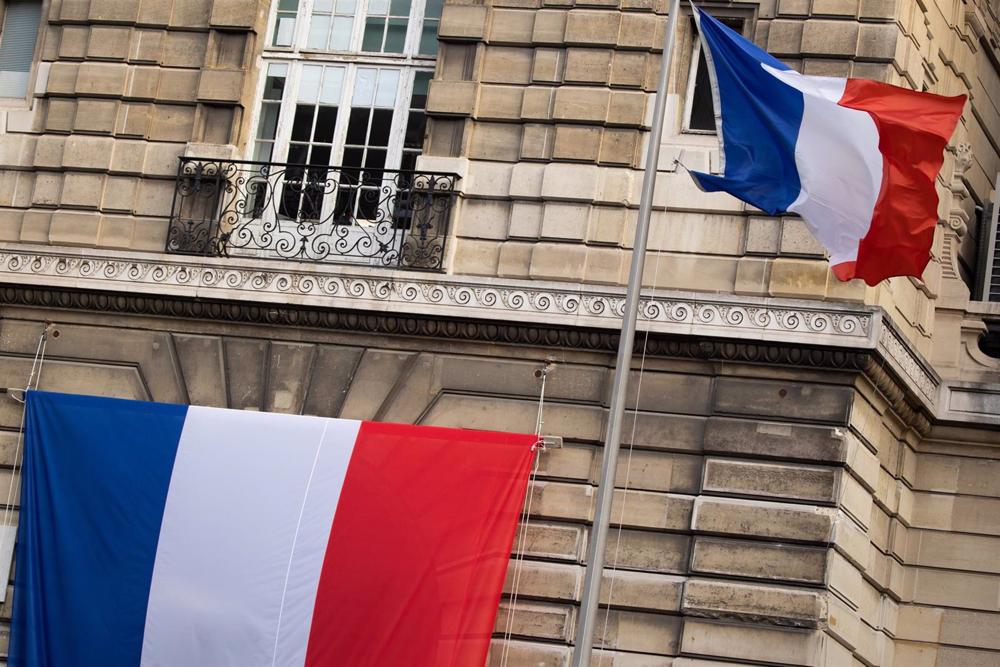
The French authorities have responded Thursday to criticism from Algeria, which has accused Paris of the «clandestine and illegal exfiltration» of an opponent, assuring that providing «consular protection» to a person with French nationality «is not out of the ordinary».
The Algerian government has recalled Thursday its ambassador to France, Said Musi, for consultations after «strongly protesting» what it considers as a «violation of national sovereignty» by Paris in facilitating the flight of Algerian opponent Amira Buraoui, who was in Tunisia.
«To recall that Mrs. Buraoui is of French nationality and as such, the French authorities exercise their consular protection, which we do for all our compatriots in detention. This is a procedure that is not out of the ordinary,» a spokesman for the French Ministry of Foreign Affairs defended hours later.
In response to the recall of Ambassador Musi for consultations, the French diplomatic spokesman distanced himself by pointing out that it is not his decision to comment, although he stressed Paris’ intention to «continue working to deepen the bilateral relationship in the spirit of the Algiers Declaration», signed by both countries at the end of last August.
Buraoui was transferred last February 6 from Tunis to the French city of Lyon. The activist was arrested in Tunis on February 3 as she was preparing to travel to France after crossing the Algerian-Tunisian border clandestinely.
She then appeared before a Tunisian judge on February 6, who released her and returned her passport, although she was arrested again as she left the court with the aim of being deported to Algeria. However, she was transferred to the French Embassy, after which she finally traveled to Lyon, as reported by the newspaper ‘Tout sur l’Algerie’.
The opposition activist was sentenced to two years in prison in May 2021 for «attacking the person of the President of the Republic», «insulting an official in the exercise of his duties» and «disseminating information likely to undermine public order», as well as «attacking the precepts of Islam and the prophet».
Buraui was sentenced in 2020 to one year in prison on these same charges, for «publications likely to undermine national unity» and for «inciting» demonstrations during the confinement imposed by the authorities for the coronavirus. Buraui launched a campaign in 2014 against the campaign of the then president, Abdelaziz Bouteflika, for a new mandate, something she succeeded in doing. Subsequently, she was one of the organizers of the mobilizations against the president when he announced in 2019 that he would again contest the polls, which eventually forced his resignation in April of that year.
Bilateral tensions surface again less than two months after French Interior Minister Gérald Darmanin announced the return «to a normal consular relationship» with Algeria after more than a year with the issuance of visas halved by France, which strained relations between Paris and Algiers.
The aforementioned Algiers Declaration was ratified by the presidents of France and Algeria, Emmanuel Macron and Abdelmayid Tebune, respectively, who agreed on a document certifying a «new irreversible dynamic» in relations between the two countries, 60 years after Algerian independence from French colonialism and in the face of differences over this point and other regional issues.
Source: (EUROPA PRESS)